10 min read
Vacation Rental Website Design Ideas for Maximum Direct Bookings
Ben Day
May 14, 2026 10:36:16 AM
Listing your vacation rental property on booking websites like Airbnb, Booking.com, or VRBO is a great way to get started. But if you want to maximize your earnings, you need to focus on getting direct bookings.
Direct booking websites offer many advantages, from saving on commission fees to building a stronger relationship with guests. But designing a website is not as simple as uploading a few photos and some rental rates. A bad or poorly designed website can do more harm than good.
To help you get started, we’ve compiled a list of vacation rental website design ideas, things to avoid, and examples of how we at Jetstream have helped our clients achieve great results.
Table of contents
- Benefits of building a direct vacation rental website
- Should you use a vacation rental website builder?
- How to design a vacation rental website
- Mistakes to avoid when building a vacation rental website
- Our favorite vacation rental website design examples
- Design the perfect vacation rental website for your business
- FAQs about vacation rental website design
Increase your ROI with a professionally designed vacation rental website.
Jetstream helps you create a custom website optimized for bookings. We manage your website for you, so you can focus on other aspects of your business.
Benefits of building a direct vacation rental website
From saving on commission fees to building a stronger relationship with guests, there are many reasons why you should focus on getting direct bookings.
1. Increase brand recognition
When you list your property on a third-party site, you don’t have complete control over how your brand is presented. Brand elements like your logo, color scheme, fonts, and tagline are often lost in the shuffle.
A direct booking website gives you full control over how your brand is presented and allows you to create a consistent look and feel across all touch points. You can tell your story, show off your unique personality, and build trust with potential guests. All of which are essential for converting lookers into bookers.
2. Ease of use

A simple vacation rental website design with easy navigation attracts potential guests
The booking process should be easy for both you and the guest. A direct booking website allows you to design a booking flow optimized for conversions. You can upsell guests on add-ons, capture important information like contact details and dietary restrictions, and take payments without ever leaving your site.
A good booking flow not only makes it easy for guests to book but also helps you close more sales and avoid potential problems down the road.
3. 1:1 Personalized guest communication
Personalization is key to standing out in a crowded marketplace. When you list your property on a third-party site, you compete with hundreds or thousands of other listings. It can be hard to break through the noise and connect with potential guests on a personal level.
A direct booking website gives you complete control over how and when guests receive important information. You can set up automated email or SMS messages to be sent at key points in the booking process, such as when a reservation is made, confirmed, or canceled. This helps reduce no-shows, last-minute cancellations, and other potential problems.
4. Increased revenue for hosts and lower prices for guests
You’re typically charged a commission fee per booking when you list your property on a third-party site. That’s a significant chunk of money that could go into your pocket instead.
A direct booking website allows you to keep 100% of the revenue from each booking so you can maximize short-term rental profits. You can also offer discounts and promotions to guests who book directly, making your property more attractive and increasing your chances of getting a reservation.
4 Ways to create a vacation rental website
Creating a website from scratch can be a daunting and expensive task—you’ll likely need to hire someone to create the site for you. But a website builder can make it easy and affordable to create a professional-looking website in just a few hours.
Here are a few options to consider:
- Generic website builder
- Short-term rental website builder
- Custom-made by developer or designer
- Outsource to a short term rental service solution (Jetstream)
Generic website builder
A generic website builder, like Wix or Squarespace, offers pre-built website templates that can be customized to fit your needs. You can add or remove pages, change the layout of your site, upload photos, and videos, and use their ready-to-use builders.
Generic website builders are easy to use and don’t require any technical expertise. They’re also relatively affordable. The downside of using a generic website builder is that you won’t be able to take advantage of all the features that are specific to vacation rentals. For example, you won’t be able to add a booking engine or set up automated messages.
Short-term rental website builder
Vacation rental website builders typically offer all the features you need to run your business, from a listing management system to a booking engine and payment processing. You can customize the look and feel of your site, ready-to-use vacation rental website templates, install diverse add-ons, plugins, and collect guest reviews.
The downside of using a vacation rental website builder is that they can be more expensive than generic website builders. You’ll also need to ensure that your chosen platform integrates with the other systems you use, such as your PMS or channel manager. And if you already have an existing website, migrating your content to a new platform can be time-consuming and challenging.
Custom made by developer or designer
If you want complete control over your website and don’t mind spending a bit more money, you can always have a custom site built by a developer or designer. This way, you’ll be able to create a unique website that perfectly reflects your brand. Everything will be tailored to your needs, from the layout to the color scheme and the content.
The downside of having a custom website is that it can be very expensive. You’ll also need to find someone who can understand your vision and build a site that meets all your expectations. And if you want to make changes or add new features down the road, you’ll likely need to hire someone to do it for you.
Outsource to a short term rental service solution (Jetstream)
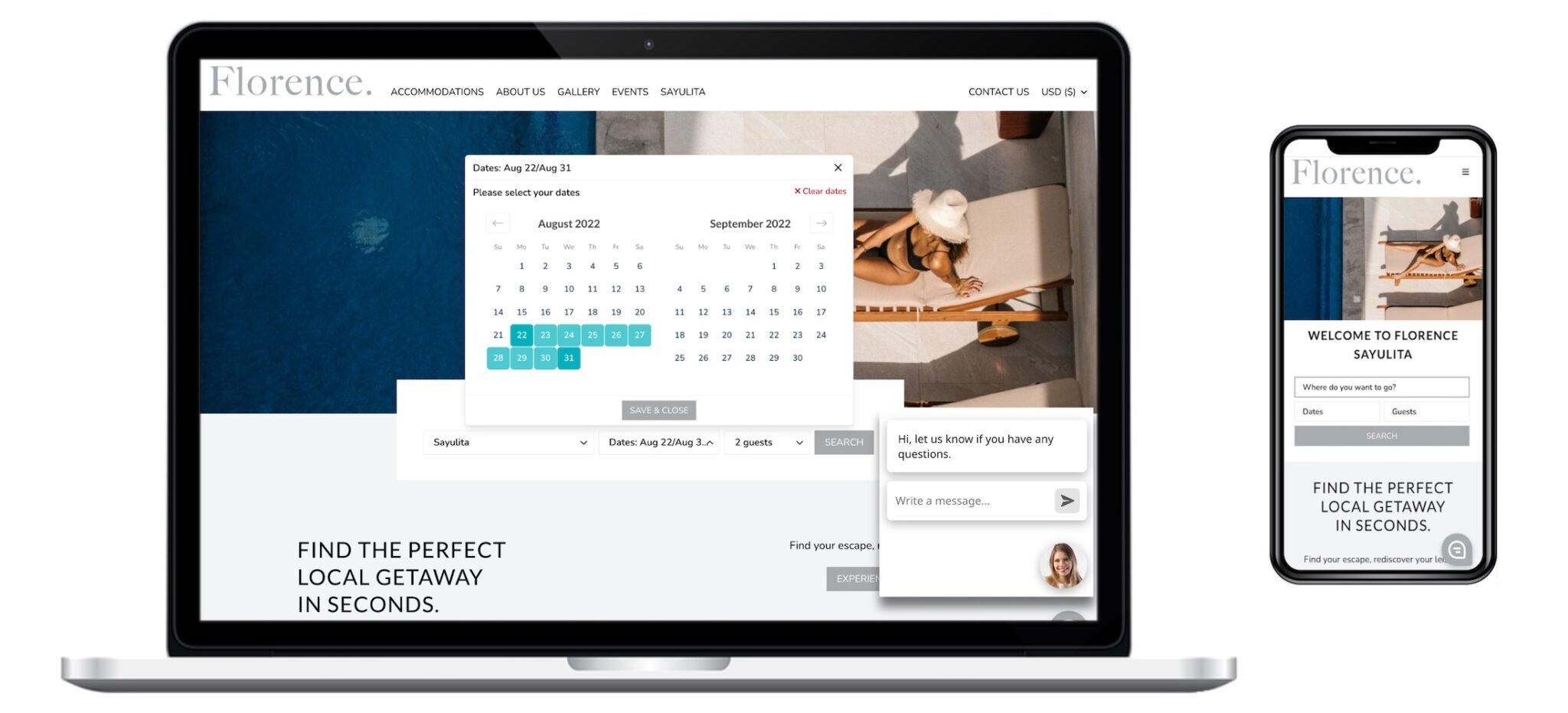
Jetstream helps build and optimize superfast mobile-enabled direct booking websites
If you don’t have the time or the money to design and build a beautiful website, you can always outsource the task to a short-term rental service solution like Jetstream. Jetstream builds superfast mobile-enabled direct booking websites for property managers—whether you manage multiple vacation rentals or just one unit.
And if you already have an existing website, Jetstream can help you migrate your content and listings to their platform. We’ll even take care of the design and setup for you, so you don’t have to lift a finger. With Jetstream, hospitality websites typically get refreshed or rebuilt every 3 to 6 years, so your site is constantly optimized for maximum direct bookings.
Increase your ROI with a professionally designed vacation rental website.
Jetstream helps you create a custom website optimized for bookings. We manage your website for you, so you can focus on other aspects of your business.
How to design a vacation rental website
A user-friendly, well-designed, and informative website is key to boosting your direct bookings. Here are a few tips to keep in mind when designing your site:
1. Focus on the user experience
Your website should be designed with your guests in mind. The first thing that visitors notice when they land on your site is its look and feel. It should be easy to navigate and provide attractive information about your offer. The best sites make it easy for guests to find their ideal place to stay with filters, clear descriptions, and high-quality photos based on their specific needs and interests.
For example, if you’re targeting families, your website should highlight any kid-friendly amenities and activities like playgrounds, swimming pools, and babysitting services. And once they’ve found it, booking should be a breeze.
2. Make it mobile-friendly
Factors that make a website mobile-friendly include a responsive design that automatically adjusts to the device’s screen size, large, easy-to-click buttons, simple menus, and navigation. Ensure that your site loads quickly on mobile devices to avoid potential customers getting frustrated and going elsewhere.
3. Use high-quality images and videos
The photos and videos you use on your website significantly influence a guest’s decision to book. High-quality photos and videos will help potential guests to visualize themselves in your home or apartment. Mix landscape and portrait shots, close-ups, and wide shots.
4. Write compelling copy
The text on your website should be clear, concise, and easy to read. This is a great vacation rental marketing tip for driving bookings. When writing your website’s copy, focus on the benefits of staying at your rental rather than its features. For example, your rental descriptions should highlight the unique features of your property and its location. And don’t forget to include key information such as your cancellation policy, check-in and check-out times, and house rules.
5. Use calls to action
Calls to action (CTAs) should be placed prominently on your website so visitors can’t miss them. And they should be designed to make them easy to click on mobile devices. For example, you could have a CTA that says “Book Now” or “Check Availability” on your homepage.
6. Include customer reviews
Reviews and testimonials from past guests are among the best ways to build trust with potential guests. Be sure to include positive reviews from sites like TripAdvisor, Google, and Airbnb on your website. You can also ask past guests to write a review or testimonial that you can feature prominently on your site.
Mistakes to avoid when building a vacation rental website
While there are many things you can do to make sure your website is effective, there are also a few pitfalls to avoid. Here are some of the most common mistakes property managers make when building their websites:
1. Not targeting specific audiences
If you’re new to web design, it’s easy to fall into the trap of thinking that you should just be able to upload a few images and a couple of pages and then sit back while your site magically appears online.
This isn’t always true. To create an effective website, you need to have a plan. You need to know what your goals are and who your target audience is. You also need to spend some time researching other websites in your industry to see what works and what doesn’t.
For example, if you’re targeting families, look at some of the top family vacation rental websites to see what they’re doing right. Perhaps you notice a punchy propert description, high-quality photos and videos, great testimonials, or even simply an intuitive website layout. Take those lessons and apply them to your site.
2. Not having a clear purpose for your website
Your website should have a purpose: to generate leads, increase bookings, or simply build brand awareness. Whatever it is, ensure everything on your site works towards that goal.
Every page, every image, and every piece of copy should help you to achieve your objective. If it’s not, then it shouldn’t be on your website.
For example, if your goal is to increase bookings, then your website should be designed with that in mind and your booking engine should be prominently displayed and easy to use. Or, if you want to use your website to generate leads, then make sure you have a strong call to action (CTA) that encourages visitors to sign up for your mailing list or contact you for more information.
3. Not making your contact information easy to find
Your contact information should be easy to find on your website. That includes your phone number, email address, and social media links. You don’t want potential guests to get frustrated trying to find how to get in touch with you and give up entirely.
Most people will look in the header or footer of a website for contact information. So, ensure your phone number and email address are in both places. You can also add a CTA button (like “Book Now”) that links to your booking engine or contact form.
4. Not keeping your content up-to-date
Your website is not a set-and-forget proposition. You need to keep your content up-to-date, especially your availability calendar. It’s frustrating when a potential guest tries to book a vacation rental only to find out that it’s already been booked.
You should also regularly review your site for broken links, outdated information, and typos. If you have a blog, be sure to add new posts regularly. This will help improve your SEO and show potential guests that your site is active and well-maintained.
Jetstream’s team of travel marketers will not only build the website for you but also keep your content up-to-date and optimize your listings using the most sophisticated marketing technologies, maximizing revenue and freeing your hands from this task.
Our favorite vacation rental website design examples
At Jetstream, we have helped our clients design and build some amazing vacation rental websites. Here are a few of our favorites:
1. Canadian Rockies Vacation Rentals
Owned by Jonas Gordon, Canadian Rockies Vacation Rentals is a vacation rental management company that operates multiple properties in Canmore, Canada.
The first thing you notice when you visit the site is the beautiful hero image and the search engine bar that’s front-and-center. This immediately lets visitors know that they can search and book a rental directly on the site.
The site is easy to navigate with clear menus and links to all the important information, like contact details, property descriptions, rates, and more. The property descriptions are clear and concise, and the photos are beautiful.
The availability calendar is prominently displayed, making it easy for potential guests to check for availability and book their stay. Customer reviews throughout the site help to build trust with potential guests.
2. Florence Sayulita
Florence Sayulita manages vacation rentals based in Sayulita, Mexico. They manage multiple properties in the area, all available to rent on their website.
The hero image and photos throughout the site do an excellent job of capturing Sayulita’s laid-back vibe.
The property descriptions are clear and concise, making it easy for potential guests to find the perfect rental for their needs. The availability calendar is easy to use, and plenty of customer reviews help build trust with potential guests. Overall, the site is extremely user-friendly and makes it easy for visitors to book a stay.
3. Leavetown
Leavetown is Jetstream’s own OTA vacation rental platform. We designed the site to be clean, modern, and easy to use, making it perfect for single-unit property owners.
The homepage features a beautiful hero image, as well as clear descriptions of our different product offerings. The layout is simple and easy to navigate, making it quick and easy for visitors to find what they’re looking for.
The property listing pages showcase each rental’s unique features, with clear descriptions and high-quality photos. The availability calendar is prominently displayed, making it easy for potential guests to check for availability and book their stay. Overall, the site is designed to make it as easy for visitors to find and book their perfect vacation rental.
Design the perfect vacation rental website for your business
A great vacation rental website is essential for any property manager looking to increase direct bookings for their vacation rental business. It’s critical that your site:
- Has a user-friendly design that’s easy to navigate
- Features clear and concise property descriptions
- Prominently displays the availability calendar
- Showcases customer reviews
- Displays high-quality photos
Website builders are an excellent option for those looking for an easy and affordable way to build a great-looking website. But with so many design options, it can be tough to know where to start. The most important thing is to keep your audience in mind. Your website should be designed with your potential guests in mind, making it easy for them to find the information they need and book a stay.
When you outsource your website design with a service like Jetstream, your vacation rental website is tailored specifically to your business. We work with you to understand your unique needs and build a website that is designed to help you increase direct bookings. Your website is constantly optimized, updated, and monitored, so you can focus on other aspects of your business.
Increase your ROI with a professionally designed vacation rental website.
Jetstream helps you create a custom website optimized for bookings. We manage your website for you, so you can focus on other aspects of your business.
Frequently asked questions about vacation rental website design
Should I have a website for my vacation rental property?
You should have a website for your vacation rental property to increase direct bookings and give potential guests a clear picture of what your property has to offer. A well-designed website will help you stand out from the competition and attract more bookings.
How do I create a website for my vacation rental property?
You can create a website for your vacation rental property using a website builder, hiring a developer, or outsourcing to a service like Jetstream.
What is the best way to advertise your rental property?
The best way to advertise your rental property is to list it on vacation rental listing sites like Airbnb and HomeAway, design a professional website that is easy to find online, and use social media to share photos and information about your rental.
Should you use a vacation rental website builder?
A vacation rental website builder is a great option for creating a professional website without hiring a developer. Websites built with a vacation rental website builder are typically more affordable and easier to maintain than those built from scratch.
Posts by Tag
- Channel Distribution (75)
- Marketing (71)
- Hotel Trends & Advice (59)
- Technology (53)
- Real Estate (27)
- Blog (6)
- Case Study (5)
- Passive Income Ideas for REALTORS® (5)
- Boutique Hotel Owners (4)
- Property investors (4)
- Airbnb (1)
- Blog (1)
- Hotel and resort operators (1)
- Property Management (1)
- Real Estate Brokers (1)
- Revenue Management (1)
- Short term rentals (1)
- Tools and Technology (1)
- Travel (1)
- Vacation Rental Platforms (1)
- featured talks (1)
Related Posts
AI for Hotels: How Artificial Intelligence Is Reshaping Hospitality Operations