
Any investment in short-term rental property is a big decision. It’s not just about finding the right location but also understanding the rental market in that area. And if any factors are overlooked, it could result in wasted capital.
So where do you start?
Not all markets are created equal, and just because a market is “hot” doesn’t necessarily mean it’s profitable—or a good fit for your business.
In this article, we’ll explain everything you need to know about short term rental market analysis. By the end, you’ll have a solid framework for assessing a short-term rental (STR) market’s potential and making informed investment decisions.
Table of contents:
- What are the perks of investing in the short-term rental market?
- 4 Steps to analyzing your vacation rental investment
- How manageable is the market?
- Do you really have time to manage a short-term rental?
- Elevate your short-term rental business with Jetstream
- FAQs about short-term rental market analysis
Not sure where to start with your short-term rental investment?
Jetstream can help you plan and execute a marketing strategy that will get you results.

What are the perks of investing in the short-term rental market?
Short-term rentals can be profitable compared to income from a traditional annual lease agreement. Here’s a quick rundown of the main benefits:
- Higher return on investment (ROI) potential: nightly rates are usually higher than monthly lease rates, so you can earn more money from an STR in the same amount of time.
- Easier maintenance: since guests only stay for a short period of time, you don’t have to worry about wear and tear as much as you would with a long-term tenant.
- Flexibility and control: as the owner or manager of a short-term rental, you have more control over who rents your property, how often it’s rented, and what kind of guests stay there.
- Increased exposure and marketing potential: with an STR, you have the opportunity to market your property to a global audience of potential guests.
- Scalable business: STRs offer greater scalability because you can use technology to support the business and manage bookings over time.
But running an STR business demands hours of work and a good understanding of the industry. You’ll need to wear many hats, from ensuring your property is up to guest standards to handling customer inquiries and complaints.
With an efficient service like Jetstream, you can automatically sync your listing across multiple booking platforms and set up automated cleaning and maintenance schedules, guest communication, and other day-to-day operations. This way, you can transform your STR into a source of passive income.
4 Steps to analyzing your vacation rental investment
1. Choose your tools

Jetstream’s revenue management team helps evaluate and identify opportunities for your STR.
Smart analytical tools can save you time and money. You can use them to evaluate a market, understand your target audience, and find the best listing price for your rental. Some of the most popular analytical tools for vacation rental investors are:
- AirDNA provides data-driven insights about vacation rental performance, demographics, rental demand and annual revenue, comparable vacation rental properties in the area, and trends.
- Pricelabs is a dynamic pricing software that analyzes data from multiple listing platforms to help you optimize your prices and increase bookings.
- AllTheRooms offers an integrated suite of vacation rental analytics tools and gives insights into your property’s current performance, market trends, and growth potential.
Monitoring and interpreting these data points will give you a clear understanding of how your vacation rental is performing in the market. But if you lack the technical know-how or don’t have the time to do it yourself, Jetstream can help.
Jetstream’s revenue management team will estimate your STR revenues based on information from AirDNA and other market channels. With metrics like cash-on-cash return, Jetstream can accurately compare the profitability of different vacation rental properties.
2. Get to know the market types
The market you’re in will determine your target audience, how much you can charge for rent, and what amenities and services you need to provide. Here’s our list of the most common market types for vacation rental investors:
- Urban/Downtown areas are located in the city’s heart, near popular attractions, nightlife, and public transportation. They usually have a higher nightly rate and require less effort to fill vacancies.
- Suburban/Residential rentals are usually family-friendly homes in residential neighborhoods near schools and parks. They have a lower nightly rate than downtown rentals but may take longer to fill vacancies.
- Beachfront/Waterfront properties are located on or near bodies of water like beaches, lakes, and rivers. They often have a higher nightly rate but may be harder to book during off-peak seasons.
- Retreat markets are rural areas with a slower pace of life and few entertainment options. They’re popular among guests looking to escape the hustle and bustle of the city.
- Regional vacation areas are areas where locals drive for a smaller budget and easier vacations, like visiting a state or national park.
3. Analyze tourism data
Tourism data will give you insights into the ebb and flow of your local vacation rental market. You can use it to predict when demand for vacation rentals is high and low, so you can adjust your prices accordingly. You can also use it to understand which amenities and services guests want in a vacation rental.
For example, if you want to invest in or near a national park, you can check the National Park Service’s tourism data to see when visitation is highest, so you can price your rental accordingly. Local chamber of commerce data is also a great resource for understanding how much tourism a town gets and gauging an investment potential in a specific area.
4. Check market regulations
STR regulations affect everyone in the vacation rental industry, from investors to property managers to guests. But STR regulations can be hard to track because:
- They change all the time. For example, a city that’s not regulated today might pass a law tomorrow that will make it very difficult to operate and manage vacation rental.
- They aren’t black or white. There are a lot of gray areas when it comes to STR regulations. What’s allowed in one area might not be allowed in another. Therefore, understanding the details of the regulations is critical.
Positive regulation means that non-owner occupied rentals have no cap on dates the property can be rented.
How manageable is the market?
The size and manageability of the market are two primary considerations for short term rental analysis. Here’s a list of things to think about:
Boots on the ground
You don’t have to self-manage your STR. Outsourcing property management with Jetstream is a great way to operate your STR without worrying about the day-to-day processes. You can coordinate with the cleaning and maintenance staff and automate processes.
Jetstream’s integrations with Operto Teams and Breezeway let you automate your scheduling, monitor activities, and keep your properties in top condition. While your cleaning and maintenance staff are the ‘boots on the ground’, Jetstream’s technology supports and builds that relationship.
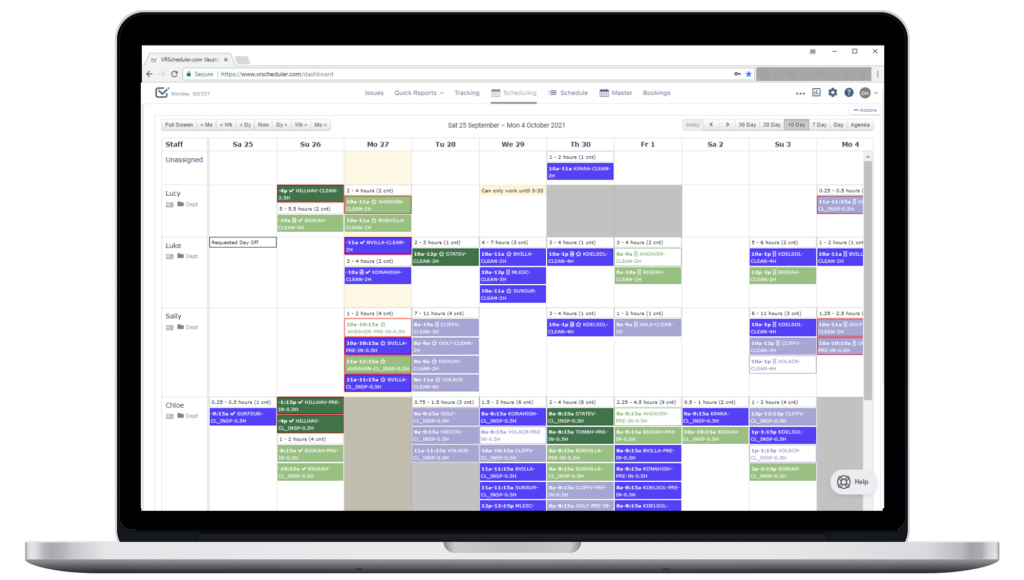
Jetstream integrates with Operto Teams to manage and monitor cleaning schedules seamlessly
Jetstream allows you to outsource many STR management tasks to maximize vacation rental income:
- Optimizing your STR listing across major booking channels.
- Managing and updating the maintenance and cleaning schedule in real time.
- Creating a dynamic pricing strategy to help give you the best possible price according to factors like seasonality.
- Providing 24/7 guest communication and support through a multi-lingual guest-facing team
Research income data for local STRs
Reading an STR report, identifying the trends, and then comparing the data to your property performance is a great way to get a sense of how well you’re doing relative to the competition and where there might be opportunities for improvement.
Some important things to look for in an STR report are
- Occupancy rate: the number of nights your rental is booked divided by the number of nights it could be booked in a year.
- Revenue per available room (RevPAR): a measure of profitability that looks at your total revenue divided by the number of rooms available for rent.
- Average daily rate (ADR): the average amount you charge for a rental per night.
Researching local STRs in your area will give you a sense of what to expect for your investment and how to price your rental competitively.
Get to know seasonality factors
Seasonality factors can greatly impact your rental business, so it’s important to understand how they might affect your income and occupancy rate.
For example, consider establishing “out of season” rates to help encourage bookings during these slower times, like offering a lower nightly rate or a longer minimum stay requirement to help offset the slower demand.
Asset Protection
Screening guests pre-arrival ensures you’re renting to responsible individuals who will take care of your property. But it involves more than just looking at a guest’s profile on a booking site and checking their identity. And when you’re managing multiple STRs, it becomes even more critical to have a system in place to streamline the screening process.
When you partner with Jetstream, guest screening and verification come as a part of the booking process. The Autohost and Superhog integration allows guests and hosts to have a seamless screening experience.
Do you really have time to manage a short-term rental?
Running a successful STR is a lot of work. In addition to listing management, pricing, and guest communication, you must keep up marketing, optimizations, and cleaning. You wouldn’t want to spend all your time managing STRs—you would want to grow your business in other ways, generate more leads, or even take a vacation!
Jetstream integrates with the best tools in the market to automate many of these tasks for you:
- Continuous listing optimization: with market research and data-driven analysis, Jetstream can help identify areas for improvement and optimize your listing to increase bookings and drive revenue.
- Channel management: Jetstream analyzes your target market, distributes your listing across major booking platforms, and syncs calendars to avoid double bookings.
- 24/7 guest communication: Jetstream’s multi-lingual guest support team is available 24/7 to answer questions, provide recommendations, and resolve any issues that may arise.
- Cleaning and maintenance: when you outsource cleaning management with Jetstream, you can schedule, track, and manage tasks in real time.
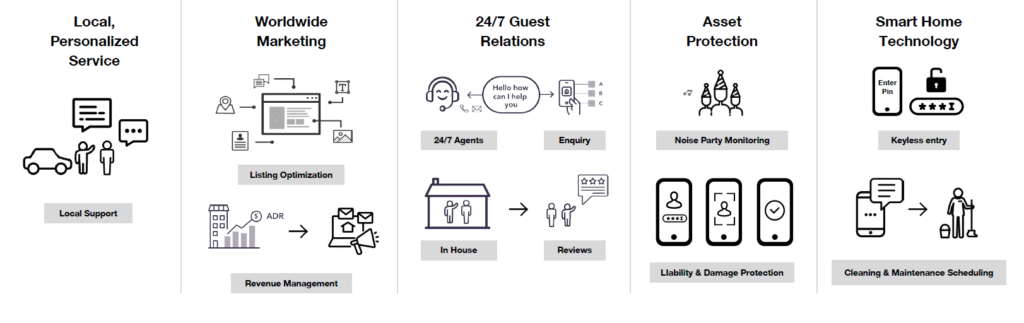
By automating these processes, Jetstream frees up your time so you can focus on other aspects of your business.
How to generate passive income in the vacation rental market
Property investors can generate passive income by partnering up with a property manager. But there are a few challenges to consider when looking for a property manager.
First, you need to find a reputable property manager with experience in the vacation rental market. Second, you need to be sure that the property manager can scale their services as your portfolio grows. And lastly, you need to ensure the property manager has a system to generate passive income for you.
Finding the right property manager involves a lot of work and can be a time-consuming process. Jetstream was created with these challenges in mind.
Outsourcing the day-to-day management of your property to Jetstream allows you to generate passive income without worrying about the challenges that come with self-management.
Jetstream operates under your brand to take care of the admin while you focus on growing your portfolio.
Elevate your short-term rental business with Jetstream
It’s essential to consider all the factors that go into running a successful short-term rental to make sure your investment pays off. From market research and asset protection to listing management and generating passive income, there’s a lot to think about when starting an STR business.
It’s not about quick fixes and getting rich overnight—it’s about slowly accumulating properties over time and seeing the benefits of compounding interest.
Let Jetstream take care of the heavy lifting for you. With our all-in-one platform, we can help you manage your listings, screen guests, optimize your rates, and take care of all the day-to-day tasks of running an STR business. Plus, you can create tailored packages regardless of the number of properties you manage.
Not sure where to start with your short-term rental investment?
Let Jetstream help you plan and execute a marketing strategy that will get you results.