Your calendar has more open nights than you would like, your costs keep creeping up, and you keep asking the same question: how to get more bookings on Airbnb without adding to the workload that already fills your week. You are not alone. Running an Airbnb is as demanding as it is rewarding, and most hosts handle the photos, the pricing, the messages, and the turnovers largely on their own.
The good news is that more bookings usually come from a handful of specific moves: understanding what Airbnb's search algorithm rewards, fixing the few things that quietly hold a listing back, and reaching guests beyond the one platform you started on. This guide walks through 11 proven ways to do exactly that, grounded in what Airbnb actually documents.
Key takeaway: To get more Airbnb bookings, give the algorithm what it scores on (listing quality, popularity, and competitive price), keep your calendar open and your response rate high, and earn the reviews that lift both ranking and conversion. The single biggest lever, once your listing is dialed in, is distribution: being on Vrbo and other marketplaces alongside Airbnb captures demand Airbnb alone never sees.
Why Your Airbnb Isn't Getting Booked
If your Airbnb isn't getting booked, the cause is almost always one of three things: guests are not seeing your listing in search, they see it but do not book it, or your price sits above what comparable listings nearby are charging. Airbnb's own documentation maps cleanly onto all three.
Search visibility comes first because the algorithm decides who even sees you. As Airbnb explains, its search algorithm sorts through millions of listings to find the right ones for each guest's search, and "the quality, popularity, price, and, for homes, location of a listing heavily influence how a listing appears in search results" (Airbnb Help Center). If you rank low for the dates and place guests are searching, the rest barely matters.
Conversion is the second cause. Even a listing that surfaces in search has to earn the click and the booking. Airbnb's placement is driven by performance: present a listing, watch whether guests book it more often than similar ones, and keep showing the winners. Listings that consistently underperform on conversion get buried, which is why a stale or poorly presented listing can slowly disappear from view.
Price is the third. Airbnb states plainly that listings priced below comparable nearby listings with similar characteristics tend to rank higher, and that adjusting price is "one of the ways hosts can most directly affect the performance of their listing in search." If your nightly rate is out of step with your market, both your ranking and your booking rate take the hit.
Here are the four most common reasons a listing stalls, and what to do about each.
1. Poor quality photos and descriptions
Weak photos and a thin description are the fastest way to get skipped. Your photos are a guest's first impression on the search results page, and a comprehensive description helps guests build the confidence to book. Invest in professional, well-lit images and write an accurate, easy-to-read description of the property and its amenities. We dig into the photo side of this in our guide to professional listing photos and listing optimization.
2. Poor guest experience
Unhappy guests leave low ratings, and low ratings discourage the next traveler from hitting Reserve. Any friction in the experience, from a confusing check-in to a slow reply, chips away at your reputation. Read and respond to reviews thoughtfully; it shows future guests that you act on feedback.
3. Long response times
Making a prospective guest wait can cost you the booking. Airbnb's official requirement is to respond to new inquiries and reservation requests within 24 hours, and your response rate (the share of new messages you reply to within that window over the past 30 days) is what affects your search placement and Superhost status. Faster is better as a competitive practice, but 24 hours is the documented threshold to hold.
4. Weak market understanding
Pricing, availability, and amenities all depend on knowing your local market. Without a clear read on seasonality and what comparable listings charge, you end up priced wrong and available at the wrong times, and the algorithm notices.
What Airbnb's Search Algorithm Rewards (Airbnb Ranking Factors)
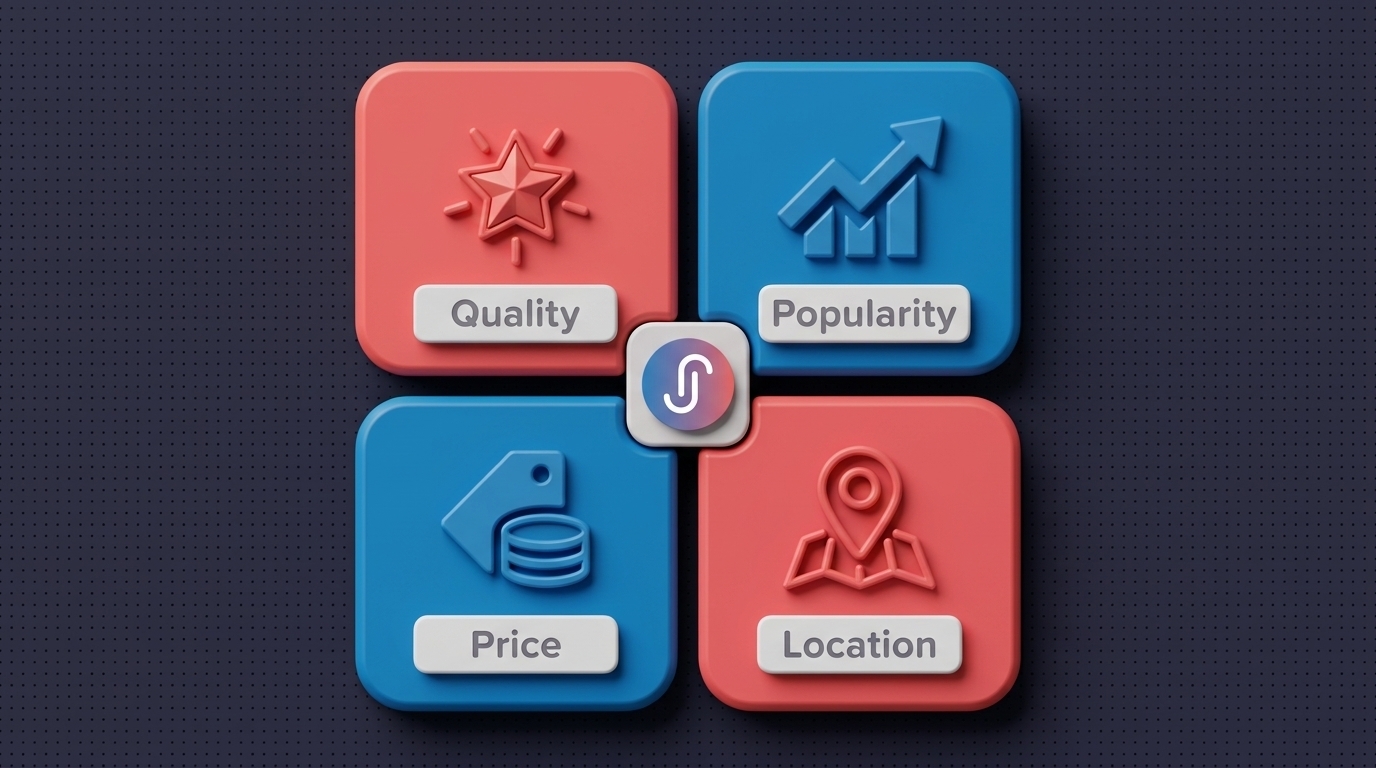
The main Airbnb ranking factors are quality, popularity, price, and (for homes) location, with some factors weighing more than others. Airbnb's documentation says the algorithm "considers many factors to determine how to order search results, but some factors have a larger impact than others," and names these four as the ones that heavily influence placement. Understanding the Airbnb search algorithm is the foundation for everything else in this guide.
Here is how the four pillars break down and what you can actually do about each.
| Ranking factor | What Airbnb measures | What you can do about it |
|---|---|---|
| Quality | Photos and videos, ratings and reviews, on-platform communication, and listing characteristics. Higher quality listings with better reviews tend to rank higher. | Use professional photos, write a complete description, add sought-after amenities, and keep your rating high. |
| Popularity | How guests engage: wishlist saves, how often guests book, and how often they message the host. More popular listings tend to rank higher. | Drive engagement with strong photos and titles, respond fast, and promote your listing to bring more eyes to it. |
| Price | Total price and how it compares to similar nearby listings for the searched dates. Listings priced below comparable ones tend to rank higher. | Price against your real comparables; use discounts and dynamic pricing to stay competitive through demand swings. |
| Location (homes) | Listings in places guests like to stay tend to rank higher; location has a large impact for homes. | You cannot move the property, so compete harder on the three levers you control: quality, popularity, and price. |
A few practical moves follow directly from these pillars.
5. Optimize your listing content and photos
High-quality photos and videos attract attention and improve engagement, which can improve ranking, and a comprehensive description gives guests the confidence to book. When a guest opens your listing, the first five photos appear as a horizontal grid at the top, so make sure those first five are horizontal or they will get cropped. Adding sought-after amenities can also make your listing more attractive and improve its visibility in searches that filter for those amenities. For the full photo framework, see our breakdown of why strong listing photos drive bookings.
6. Keep your calendar open and flexible
Availability is itself a ranking lever. As Airbnb puts it, the more dates a listing is available, the more likely it is to match a guest's plans, so adding availability may improve visibility. The same goes for flexibility on length of stay: the more flexible your minimum and maximum night settings, the more searches your listing can appear in. Note that if you do not set a maximum trip length, Airbnb applies a 31-night maximum automatically, and overly strict requirements can keep you out of results entirely.
Pricing and Availability Levers That Drive Bookings
Price is the lever you control most directly, so it is where small changes move bookings fastest. Airbnb states that "because price has a large impact on search results, one of the ways hosts can most directly affect the performance of their listing in search is by adjusting their price or offering discounts," and notes that many hosts lower prices to attract guests to newer listings or during slower seasons.
7. Use Airbnb's built-in discounts
Airbnb gives you several discount tools, and they map neatly to common situations. For a brand-new listing, you can offer a 20% discount on your first 3 bookings to build early momentum. Once you have at least 3 bookings, you can run a custom promotion. Beyond that, Airbnb documents length-of-stay discounts for longer reservations, early-bird discounts for booking well in advance, and last-minute discounts that lower your nightly price as check-in approaches (Airbnb Help Center).
8. Get dynamic pricing that fits short-term rental demand
Demand on Airbnb swings with seasons, events, and day of week, and a flat nightly rate leaves money on the table in both directions. Purpose-built short-term rental pricing tools like Beyond, PriceLabs, and Wheelhouse automate rate adjustments based on length of stay, seasonality, and local demand. Airbnb does not endorse any specific tool, and the tool itself is not a ranking factor; what helps your ranking is landing at a competitive price, which is exactly what these tools are built to do. Jetstream maintains a partnership with Wheelhouse and relays this short-term rental market data to its partners through account management.
A note on new listings
Hosts often hear that Airbnb gives new listings a temporary boost for the first month. Airbnb does not document a fixed grace period. What it does say is that the algorithm "is designed to make sure new listings show up well in search results" and that new listings "usually show up in search results within 24 hours, but in some cases they may take longer." So treat your launch as a real opportunity to gather early bookings and reviews, but do not bank on a guaranteed 30-day head start.
Win Reviews and Superhost Status
9. Earn reviews and work toward Superhost
Reviews drive both ranking and conversion: Airbnb states that higher quality listings with better ratings and reviews tend to rank higher in search, and a strong review wall is also what convinces a hesitant guest to book. Superhost status compounds this. For homes, Airbnb's algorithm directly considers the Superhost criteria, including cancellations, host responsiveness, and ratings and reviews, when ordering search results.
To become a Superhost, Airbnb requires that you be the listing owner with an account in good standing and meet four criteria (Airbnb Help Center):
- Hosted at least 10 reservations, or 3 reservations totaling at least 100 nights
- Responded to 90% of new messages, and accepted or declined new reservation requests, within 24 hours
- Maintained a cancellation rate below 1%, with exceptions for major disruptive events or other valid reasons
- Maintained a 4.8 or higher overall rating
Airbnb evaluates your performance every 3 months, looking back across the past 12 months for all listings on your account, so consistency over time matters more than any single great stay. Industry analyses suggest Superhosts see meaningfully higher occupancy and revenue than non-Superhosts, with one vacation rental data analysis (BuildUp Bookings) reporting roughly 58% occupancy for Superhosts versus 51% for others. Treat those figures as directional rather than guaranteed; the through-line is that the discipline that earns Superhost status is the same discipline that fills your calendar.
Promote Your Listing Beyond Airbnb
10. Drive your own demand with social and email
You do not have to wait for Airbnb's search to deliver every guest. Airbnb itself encourages hosts to build a social media presence to get more bookings, and pointing your own audience to your listing creates the engagement (saves, clicks, messages, and bookings) that feeds the popularity signal Airbnb rewards.
One important rule keeps this compliant: Airbnb prohibits external links, websites, phone numbers, and email addresses inside your listing description. So the flow runs one direction. Promote your property externally on social channels and to your own email list to send traffic to your Airbnb listing, and let guests find your listing on the platform. Reference your brand and your review presence by name so guests can search independently, rather than dropping contact details into the listing itself.
The Bigger Lever: Don't Depend on One Platform
11. Reach demand a single platform never sees
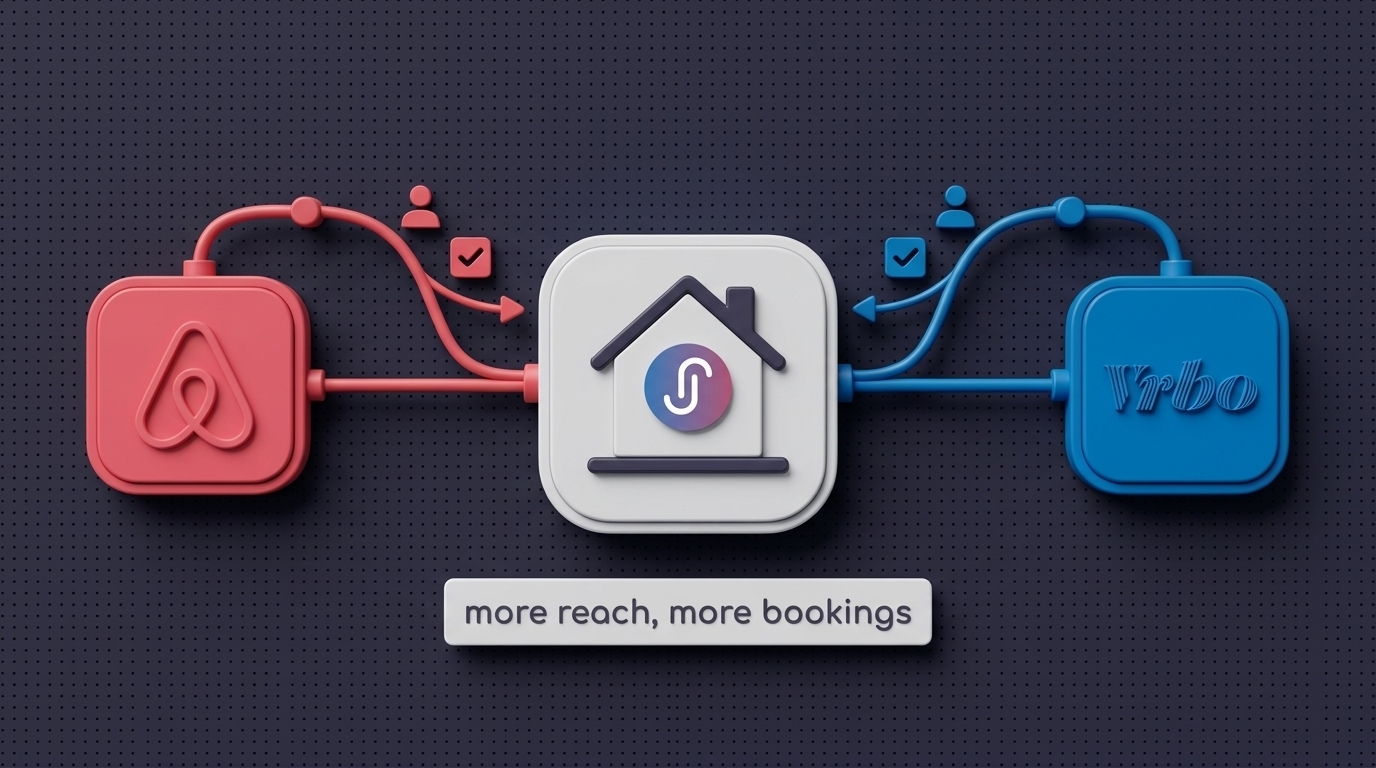
Once your listing is optimized, the largest remaining lever is distribution itself rather than another tweak inside Airbnb. Listing across Vrbo and other marketplaces alongside Airbnb puts your property in front of travelers who search those platforms first and would never see you on Airbnb alone. This is where you find bookings you would not have won at the same cost through any single channel.
This is the thesis behind Jetstream's work with hotels and resorts. As the Jetstream solutions page describes it, vacation rental platforms "reach a fundamentally different traveler segment: guests who search those platforms first and would never find your property on traditional hotel booking sites," and "these guests stay 28-65% longer and spend more per booking." That is incremental demand, the kind that supplements your existing channels rather than cannibalizing them. We unpack how to do this without undercutting your direct bookings in our piece on using short-term rental channels without losing direct demand.
The catch is operational. Managing listings, calendars, pricing, and guest messages across several platforms by hand is where double bookings and burnout creep in. Jetstream connects your existing system to the world's largest vacation rental marketplaces, keeps calendars synced in real time, and handles listing optimization, revenue management, and 24/7/365 guest services, so the extra reach does not become extra work.
Boost Your Airbnb Bookings the Sustainable Way
More Airbnb bookings come from a repeatable system you run every week. Start by diagnosing why bookings have slowed: visibility, conversion, or price. Then work the levers in order: sharpen your photos and description, keep your calendar open, price against your real comparables, earn the reviews that lift both ranking and conversion, and bring your own audience to the listing. Once that foundation is solid, the biggest remaining gains come from reaching beyond Airbnb to the demand other platforms hold.
If you would rather not run all of that yourself, that is exactly the work Jetstream takes off your plate: see how Jetstream's managed Airbnb and Vrbo distribution turns more reach into more bookings, without the operational headache.