Empty nights cost the same whether you marketed the property well or not at all, so every operator eventually asks where to advertise vacation rental inventory without burning the budget on ads that do not pay back. For most properties, the biggest lever is simply being present on the right platforms, presented well, in front of travelers who are already searching. A clever ad campaign matters far less than showing up where demand already exists.
This guide walks through where to list, which free and paid tactics actually move bookings, how to build a direct booking channel, and the metrics that tell you what is working.
Key takeaway: The most effective short term rental advertising is multi-channel distribution: listing your property across complementary platforms like Airbnb, Vrbo, and Booking.com so you reach different traveler audiences at once. Paid ads and a direct booking site add reach and margin, but breadth of distribution plus strong listing quality is what fills the calendar. Track occupancy, ADR, and RevPAR to see which channels earn their keep.
Where to Advertise Your Vacation Rental
The strongest places to advertise a vacation rental are the major online travel agencies (OTAs), because that is where travelers already search. Airbnb, Vrbo, and Booking.com reach the largest and most varied audiences, and niche platforms add targeted reach for specific property types. Listing across several of them, rather than betting on one, is the foundation of any advertising plan.
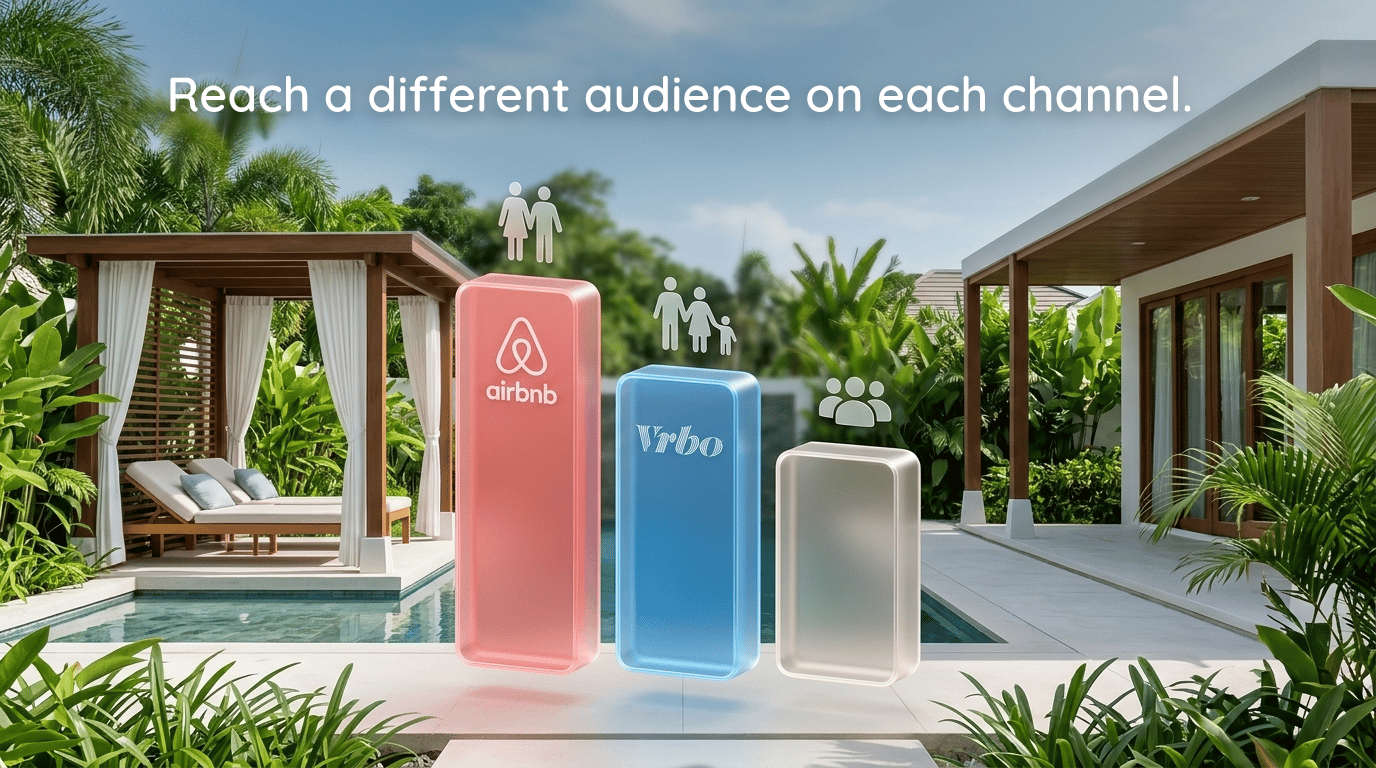
Each platform reaches a different traveler. Airbnb is the broadest, covering everything from private rooms to whole homes. It has grown to over 5 million hosts who have welcomed over 2 billion guest arrivals in almost every country across the globe. Vrbo is whole-home only, oriented toward families and groups, and notes that Vrbo travelers spend more and stay longer than travelers on other platforms. Booking.com skews international and has become a serious vacation rental channel: 1 in every 3 room nights booked in 2024 was a vacation rental, and 48% of nights booked were for international stays at the end of 2023.
The fees differ too. Most Airbnb hosts on the split-fee structure pay a 3% host service fee while guests pay a separate fee, but hosts who use property management software or run traditional hospitality listings fall under the host-only structure where most hosts pay 15.5%. Vrbo charges a 3% payment processing fee plus a 5% commission on pay-per-booking. Booking.com facilitates payments and varies its terms by market.
Niche platforms are worth adding when your property fits the audience. Curated luxury homes suit Plum Guide, which handpicks the world’s best vacation rentals, holiday homes, short term lets and Airbnbs. Cabins and unique outdoor stays do well on Glamping Hub. And if you target travel nurses or corporate housing, Furnished Finder is built specifically for stays of 30 days or longer.
| Platform | Best for | Audience strength | Host cost |
|---|---|---|---|
| Airbnb | All property types, broadest reach | 5M+ hosts, 2B+ guest arrivals | 3% split fee, or ~15.5% host-only (software-connected listings) |
| Vrbo | Whole homes, families and groups | Guests spend more and stay longer | 3% processing + 5% commission |
| Booking.com | International travelers | 1 in 3 room nights now a vacation rental | Varies by market |
| Niche (Plum Guide, Glamping Hub, Furnished Finder) | Luxury, glamping, mid-term stays | Audience-matched, lower volume | Varies by platform |
Free Marketing Strategies for Vacation Rentals
The best free way to advertise a vacation rental is to make your existing listings convert better and to extend them onto no-cost channels. Strong photography, compelling descriptions, consistent reviews, and a presence on social media and Google all drive bookings without ad spend. These tactics compound: a well-optimized listing performs better on every platform it appears on.
Reviews carry the most weight. They are one of the strongest drivers of booking decisions: 81% of travelers consider user reviews important when booking on travel sites, so a steady stream of recent 5-star reviews is among the most valuable free assets a listing can build. Photography is close behind; one practical tip is to shoot exteriors during golden hour, since that 5pm light (depending on season) bathes your property in warm tones and lifts click-through. Descriptions matter for conversion too: use storytelling that highlights local attractions and specific amenities rather than a dry feature list.
Social media is a free distribution channel in its own right. Dedicated property pages on Instagram, Facebook, and TikTok let you share photos, local guides, and short video walkthroughs that travelers discover organically. Google Vacation Rentals is another low-cost channel worth claiming: it surfaces your property directly in Google Search, Maps, and Travel, usually by connecting a channel manager or booking software, and listings booked through it carry no extra commission.
One platform caution: Airbnb does not allow external websites, phone numbers, or email addresses inside a listing description. Instead of linking out, reference your brand and review presence by name so guests can search for you independently.
Paid Advertising Options for STR Operators
Paid advertising for short term rentals falls into three buckets: platform-internal promotions on Airbnb, Vrbo, and Booking.com that boost your listing’s visibility; search ads through Google Ads; and social ads on Meta platforms like Instagram and Facebook. Each can extend reach beyond organic placement, and each works best when pointed at a specific audience or season.
The major OTAs all offer promoted placement or visibility-boost tools that lift your listing in their search results, which is the most direct paid option because the traveler is already in booking mode. Beyond the platforms, search and social ads let you reach travelers earlier in their planning. A proven tactic is advertising around highly specific local events such as tournaments or festivals, which is an effective way to attract seasonal guests when demand spikes.
A word of caution on budgets: paid ads reward precise targeting and punish broad campaigns. Start small, point spend at high-intent audiences or peak dates, and measure the return before scaling. Treat published cost-per-click or ROAS figures as rough context rather than benchmarks, and validate every campaign against your own cost per booking.
Building a Direct Booking Channel
A direct booking channel is your own website where guests reserve without going through an OTA, and it does two things no marketplace can: it lets you avoid commission fees and it builds an owned relationship with guests you can market to again. Direct bookings cut OTA fees and keep more revenue inside the business while supporting a higher repeat-guest rate, which is why most established operators run one alongside their OTA listings.
The setup is more accessible than it used to be. Booking-website and channel-management tools let you stand up a dedicated site, sync your calendar, and capture reservations directly. Local SEO is the engine that fills it: optimize your site for searches like “vacation rental near [location]” to capture organic Google traffic, and collect guest emails so you can drive repeat stays without paying for the booking twice.
Direct booking works alongside your OTA listings rather than replacing them, and the right mix depends on your market and your goals, a balance we cover in our guide on balancing direct bookings with STR channels. For hotel and resort operators specifically, a managed distribution partner can run the channels while you keep the direct relationship, which is the model behind our Hotels & Resorts solutions.
Multi-Channel Distribution Is Your Biggest Marketing Lever

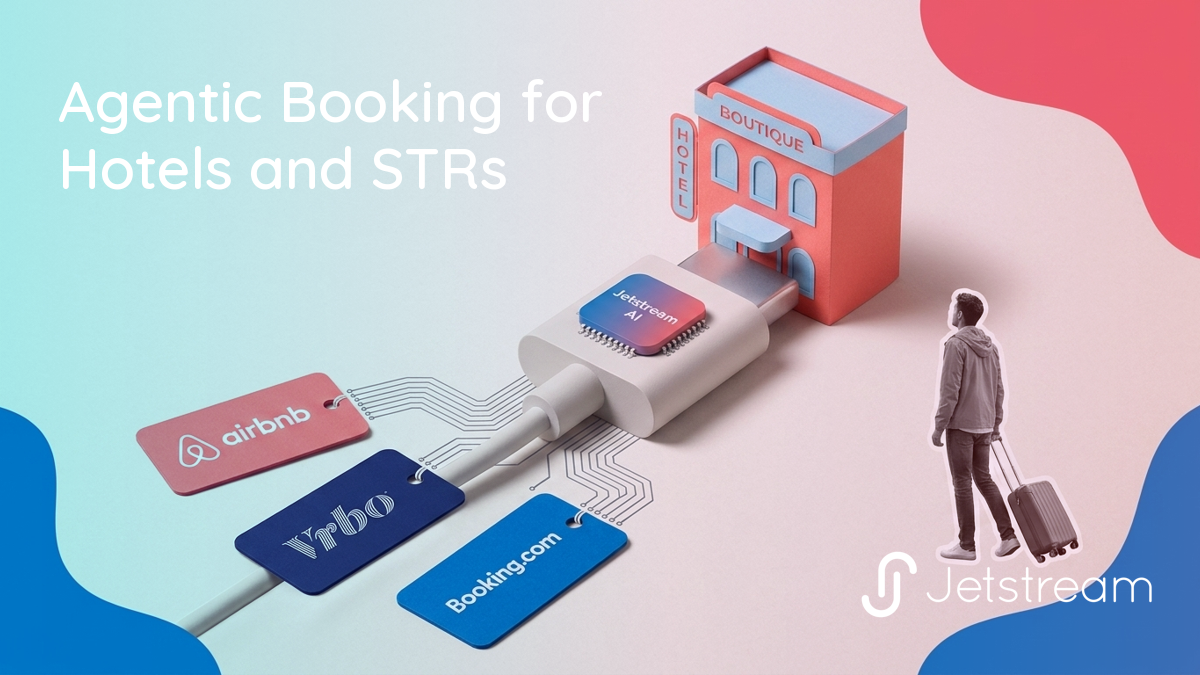
Multi-channel distribution, listing your property across several complementary platforms at once, is the single highest-impact advertising move most operators can make, and it does not require ad spend. Each platform reaches a different audience, so adding a channel adds reach you cannot get by optimizing one listing harder. This is where short term rental advertising delivers its best return.
The scale of the major platforms makes the case. Airbnb’s 5 million-plus hosts and 2 billion-plus guest arrivals reach a different pool than Booking.com’s international audience, where vacation rentals are now 1 in 3 room nights, which in turn differs from Vrbo’s whole-home, longer-staying travelers. Being present on all three, with strong reviews and optimized listings on each, captures demand that a single-platform strategy leaves on the table.
The practical challenge is operational: more channels mean more calendars to sync, more listings to keep accurate, and more inquiries to answer. That is the work that turns distribution into bookings, and it is exactly where a managed approach earns its place for hotels and resorts moving rooms onto short-term rental marketplaces.