Real estate investments are great options for long-term financial gain. But Airbnb and other vacation rental sites have opened up the possibility of getting a faster return on your investment.
If you want to buy a house and turn it into an Airbnb, then, you’re probably wondering how to analyze an Airbnb property. How to know if it’s a good investment. Or when you’ll get your money back. You’re probably even wondering if it’s worth it to go through all that trouble for an uncertain market.
We get it! It’s scary to make such a big decision, but we’ll walk you through every step you need to take to make an educated decision, go past your analysis paralysis, and start earning a passive income.
Table of contents
- What kind of investor are you?
- How to analyze an Airbnb property (and make a smart investment)
- How to analyze an Airbnb investment property
- Frequently asked questions about analyzing an Airbnb property
What kind of investor are you?
Airbnb property owners can be divided into three groups depending on their buying motivations.
Type 1: Looking for a vacation home that pays for itself
Airbnb investors that fall into type one are the ones who buy a property they can use on vacation, but also, transform it into a short-term rental (STR). Then, use that money to pay for the mortgage, taxes, insurance, and any homeowners association (HOA) fees. The two main motivators for this type of investment are:
- Buying a place to enjoy as a family and a long-term investment. This type of buyer is usually the person who has the money to purchase a property without worrying too much about it becoming profitable. But this buyer would like to make some money out of it and ensure the place gains value over the years.
- Buying a place to enjoy as a family, and also, helps in paying for associated costs. This buyer wants to purchase a vacation home for personal use but doesn’t want to pay monthly costs out of pocket. They buy this asset to use it for a few weeks or months per year and rent the rest of the time using Airbnb, Vrbo, and Booking.com. Some buyers in this category only want to rent it to pay for taxes, maintenance, and HOA fees.
Type 2: Purely looking for an investment
Investors in type two are the ones who don’t really care about where the property is located or if they’ll ever get to use it. They want to purchase a home that will be profitable. Some motivators that fall under this category are:
- Purchasing a home primarily for a short-term rental business but also for leisure. This type of buyer is the one who will purchase a home if and only if it’s going to pay off the initial investment. They might use the place eventually once they’ve reached the expected return.
- Purchasing a property as a business investment. This type of investor is really similar to the previous one, but this one doesn’t care about ever using the property. They’ll just purchase a short-term rental property once they’ve done rental market research and are certain that it has the best balance of risk and return compared to other investment opportunities such as stock or crypto.
Type 3: Buying a vacation home
This is a rare type of buyer to find. It’s the investor who has the money to buy an asset as a vacation home and doesn’t really care if it brings them money to pay the investment off. They’re usually wealthy people who just want to use their money for pure enjoyment.

Investing on a second property for business and/or pleasure can be a good way of enjoying the benefits of your work.
How to analyze an Airbnb property (and make a smart investment)
Analyzing the profitability of an Airbnb can be a little more difficult than other investments. Many factors play a role in your bookings—listing’s quality, location, seasonality, price, and comfort to name a few. However, as a type one or two investor, there are some steps you can take to conduct a market analysis and evaluate your future investment.
Step 1. Decide the type of property that you want to buy
Airbnb lets you rent different types of properties. You can look into buying:
- Townhouses
- Apartments
- Houses
- Glamping domes
- Boats
- Trailers.
Step 2. Compare the purchase price to properties in the area
The first thing you need to do is research available properties in your price range. Make sure you evaluate:
- Location
- Amount of down payment
- Budget for renovations
- Property square footage
- Budget for furniture and decorations
Then, list down the ones you find the most profitable and start your market analysis on each one.
Step 3. Observe nearby Airbnbs
Once you have an idea of where you’d like to purchase your property, you should start looking into similar assets in nearby locations on Airbnb. Consider seasonality when analyzing these properties. Follow these steps when observing similar Airbnb properties.
- Look at their reviews. Pick similar properties that have a considerable amount of recent reviews to ensure they’re currently active.
- Check their Airbnb occupancy rates. Look at the listing’s calendar to see availability. Then, calculate the percentage of bookings over a year.
- See if their night rates are consistent. If the price per night changes on weekends or holidays, come up with a weighted average daily rate.
- Calculate your estimated ROI. List your daily property expenses (mortgage, utilities, services, taxes, STR property manager) and do a quick operation to calculate estimated annual revenue and ROI.
If you don’t want to do research for yourself, you can use tools like AirDNA, Mashvisor, or contact Jetstream for a complete short-term rental consultancy that comes with a complementary revenue estimate.
Step 4. Review your liabilities
Despite the type of investment that you choose, it always comes with asset liability. When investing in stock, it might mean looking into the company’s debt, assets, and health. Property liability can come as:
- Mortgage, taxes, maintenance fees, and asset depreciation miscalculations
- Anything that happens on your property that has city implications, e.g., having to clean toxic waste
Anything damage that happens to others on your property or because of it, e.g., a cleaner falling down due to a loose step, or a tree falling into your neighbor’s backyard.
Step 5. Seek professional advice on taxes
It’s important to understand the tax implications of investing in a short-term rental property, for instance the capital gains tax on assets and which operating expenses are eligible tax write-offs.
Always get expert advice to understand how to structure your taxes to maximize your investment whilst staying within the rules to avoid exposing yourself to risk. Remember that laws and rates of taxation will vary depending on the state or country where you’re operating.
Step 6. Factor in the mortgage payments
The mortgage is usually the biggest payment that you need to make when buying a property. It’s usually made out of four components:
- Principal: This is what pays for your loan.
- Interests: What you have to pay extra for borrowing money from a lender.
- Taxes: All charges that are payable to your government.
- Insurance: Protects your property from any accidents.
Any miscalculation in mortgage payments might become a liability.
Step 7. Calculate cash flow vs appreciation
Despite your type as an Airbnb property owner, you need to understand the different ways in which you can make money off a real estate investment. You can either calculate cash flow or appreciation. That means, getting your money back now or later.
Cash flow is the profit after you’ve met all your monthly commitments. Appreciation is the future cost of your investment and the profit you will reap when you sell it.
Investing in Airbnb for cash flow means you rent your place and get someone else to pay for your mortgage. But cash flow can be positive, even, or negative. Making an investment in real estate for appreciation, means you get to use your future profit in bigger investments. When you invest in short-term rental properties, you get both.
Step 8. Work out how much setup is involved
Define how much money your total upfront investment will be and budget for:
- Furniture and appliances,
- decoration,
- tech for remote property management like:
- Keyless locks
- CO2 monitor devices
- Smart bulbs and plugs
Step 9. Decide whether to self-manage or outsource
It’s okay if you want to self-manage your STR, but you don’t have to. Hiring a remote property manager is a great way to make your Airbnb profitable without worrying about the day-to-day operations. In fact, if you get vacation rental cleaning services or a realtor to do the boots-on-the-ground type of work, you won’t need to move a finger to manage your listing.
The issue with some property managers is that they often charge high fees and can place restrictions on the property and owner. But not all property managers work the same way. Jetstream is a full-service channel and schedule manager that allows you to outsource many STR management responsibilities like:
- Writing, optimizing, updating, and promoting your Airbnb listing
- Managing your contractor’s schedules
- Building a dynamic pricing strategy to maximize your vacation rental income.
And paying at the end of the month according to your profits.
Even if you decide to outsource or self-manage your Airbnb, you should add the associated costs into your budget for monthly payments.
Step 10. Check out nearby services available
One of the things you should take into account when buying a property for Airbnb is if you have local services. If your Airbnb rental is far away from a city, you might struggle to find cleaners, landscapers, hot tub specialists, or even property managers that want to work for you.
Not having nearby services isn’t necessarily a problem if you’ll manage the property yourself, but it makes it harder to scale in the future.
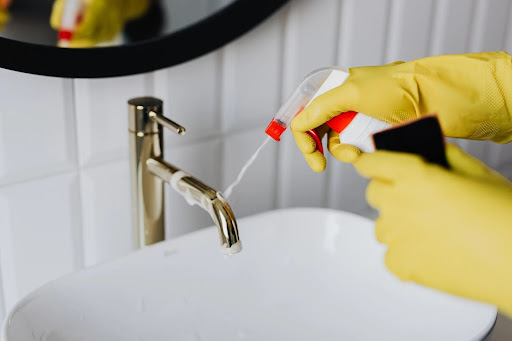
Having access to nearby cleaning and other maintenance services is crucial for growing your Airbnb business remotely.
Step 11. Brush up on local laws
Before you get too caught up on certain investment properties, you need to do the due diligence. Contact the city or municipality to check if you can actually run an Airbnb business in that location, and study the state or city regulations.
Neglecting to do so, makes you liable. RentResponsibly is a good resource for you to review local regulations.
Step 12. Purchase your property for Airbnb use
Once you’ve gone through all the steps and discovered that there’s enough Airbnb market to make your property profitable, the only thing left to do is purchase your property and get it ready to receive your first guest.
How to analyze Airbnb investment property
The real estate market has always been a great investment because, apart from the great potential associated with flipping a property, you can also generate income from renting a property—and use that money to help pay the mortgage.
The rise of short-term rentals such as Airbnb and Vrbo has made it easier for investors to pay off their debts and earn profits faster. However, just like any other business, you need to determine if your Airbnb property will be a good investment. To do so, you should follow these steps:
- Review your property options, and check different types of property, prices, and locations.
- Conduct Airbnb market research, review other similar properties and research their profitability. Use AirDNA for more insights.
- List all your expenses, associated costs, and liabilities.
- Get to know your guest and their buyer’s journey.
- Review if you can scale and outsource property management services.
- Study your local laws and regulations.
- Buy your next vacation rental property and welcome your first guest.
Frequently asked questions about analyzing Airbnb property
How do I know if an Airbnb property is good?
Buying an Airbnb property and wondering if it’s profitable? Try a few tests to see if there’s a market for you to profit from:
- Look at similar properties and check their Airbnb occupancy rate
- Review their prices per night and guests and multiply by their occupancy rate
- Get a third-party service like AirDNA or Jetstream to get an estimate of your yearly revenue
- Define your initial investment (including the down payment, furniture, and minor renovations)
- Make simple operations to see if your estimated return pays off the investment in a period you’re comfortable with.
What is a good return on Airbnb?
There’s no official data on what’s a good Airbnb return, but many experts online say it’s anything between 8% and 12%. If you can find a good property in a booming location that isn’t overpopulated with Airbnb listings, the return might be even higher.
How do you evaluate Airbnb potential?
To evaluate your Airbnb potential you need to review other similar properties’ performance over time and pay for a platform that can help you estimate your revenue like AirDNA.