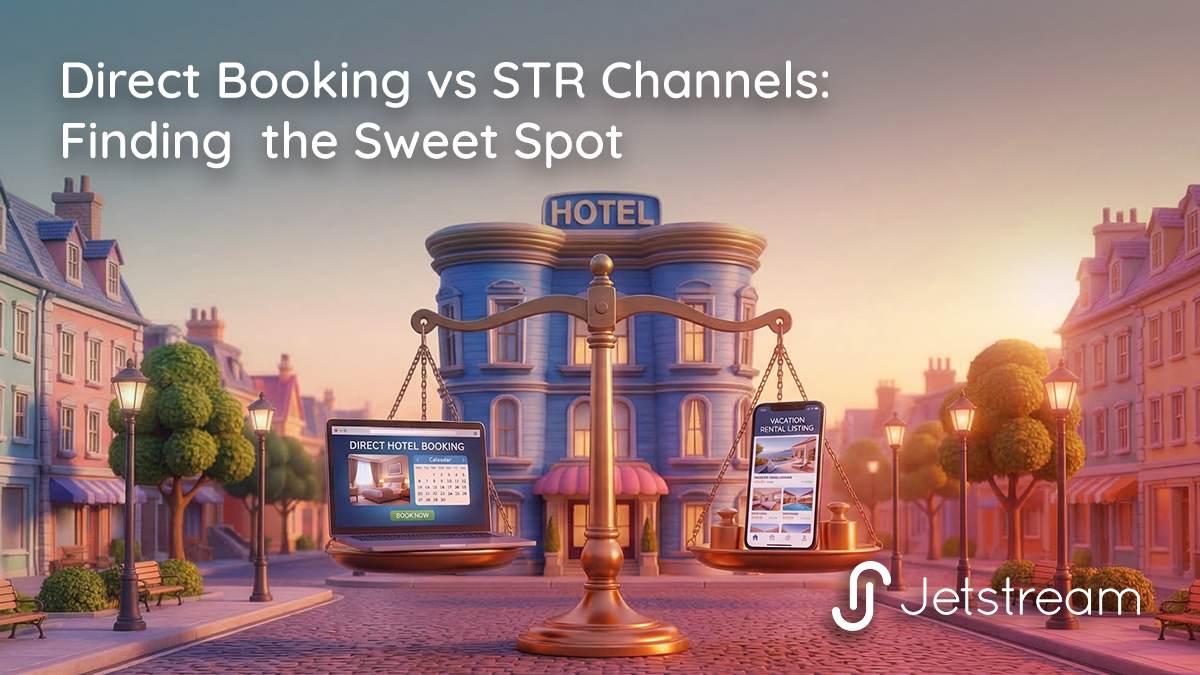
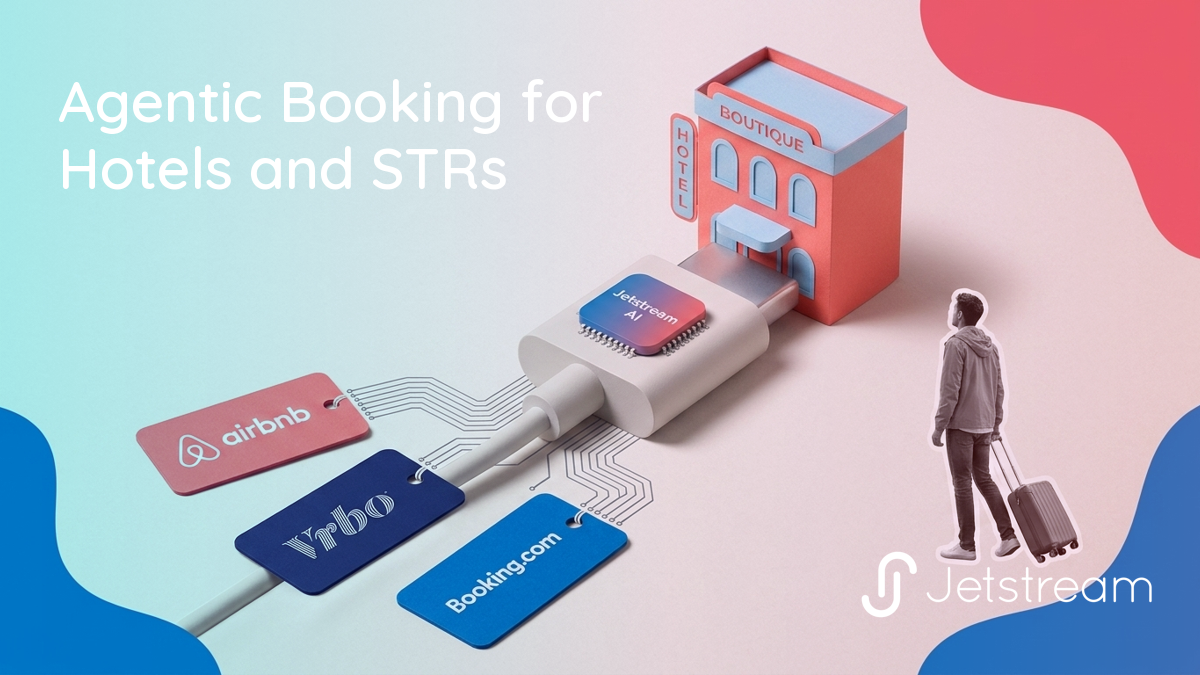
“Direct bookings vs STR channels” is the wrong debate because hotels do not win by choosing sides.
Direct bookings and STR channels serve different guest intent. When hotels force one channel to do the job of another, they create overlap, cannibalisation, and margin loss.
The real goal is not channel purity.
The goal is control, incrementality, and total booking value.
Some demand wants brand trust, loyalty perks, and short stays. Other demand wants space, flexibility, and time. Treating those guests the same leads to missed opportunity.
This article breaks down what each channel does best, where conflict actually comes from, and how hotels can find the sweet spot where direct and STR work together instead of competing.
What Direct Bookings Are Actually Best At
Direct bookings perform best when the guest already knows the brand and plans a shorter stay.
Direct channels excel at:
- Protecting margin by avoiding third-party fees
- Reinforcing brand and loyalty
- Converting repeat and high-intent guests
- Supporting short stays and flexible date searches
Direct booking behaviour is typically brand-led. Guests arrive knowing where they want to stay. They compare rates, room types, and perks, then book quickly.
This makes direct ideal for:
- One to three-night stays
- Corporate and repeat leisure travellers
- Guests motivated by loyalty benefits or flexibility
Problems arise when hotels try to force direct to capture every type of demand. Direct channels are not designed for discovery-led browsing or extended-stay evaluation. When hotels push long-stay demand through direct without adapting the offer, conversion suffers.
Direct should be protected. It should not be overloaded.
What STR Channels Do Differently (and Well)
STR channels surface discovery-led, longer-stay demand that direct channels rarely capture efficiently.
Platforms like Airbnb and VRBO are built for browsing, comparison, and imagination. Guests scroll, explore, and plan further ahead.
STR demand typically features:
- Longer average length of stay
- Earlier booking windows
- Lifestyle and experience-driven decision-making
These guests are not starting with a brand in mind. They are starting with a destination, a timeframe, or a way they want to travel.
That is why STR channels often capture:
- Extended leisure stays
- Workcations and hybrid travel
- Shoulder-period and off-peak demand
This demand usually sits outside the direct funnel. It is not demand that would have booked direct anyway.
When used intentionally, STR channels expand reach. When used carelessly, they overlap with direct. The difference is strategy, not the channel itself.
The Real Risk Is Not STR. It’s Overlap.
STR does not hurt direct bookings. Overlap does.
Cannibalisation happens when the same guest is given the same offer, at the same price, for the same stay, across multiple channels. When that happens, the cheapest or most convenient option wins, often at the expense of margin or control.
This is not a channel problem. It is a design problem.
STR demand is typically discovery-led and longer in duration. Direct demand is usually brand-led and shorter. Problems arise when hotels blur those lines.
Industry research from Skift shows that extended-stay and hybrid travel demand often follows different booking paths than traditional hotel stays, sitting outside the direct booking funnel altogether.
How overlap is created:
- Listing the same room types everywhere
- Using identical pricing and stay rules
- Allowing one- and two-night STR bookings
- Duplicating direct offers on third-party platforms
Action:
Define channel roles clearly. STR should capture demand that direct does not already convert well.
Jetstream helps hotels identify overlap risk and apply controls so STR demand remains incremental instead of substitutive.
Defining the Sweet Spot: When Each Channel Wins
The sweet spot appears when each channel is assigned the demand it converts best.
This is where most hotels get unstuck. Instead of asking which channel is better, they define what each channel is responsible for.
In a balanced model:
- Direct bookings win short stays, repeat guests, loyalty-driven demand, and brand search
- STR channels win longer stays, lifestyle travel, extended leisure, and early planners
This separation reduces friction and increases total booking value.
SiteMinder’s booking trends consistently show that longer stays generate higher revenue per booking, even when nightly rates remain stable. That is why assigning extended-stay demand to STR channels improves overall performance instead of eroding direct.
Action:
Stop comparing channels on volume alone. Compare them on fit.
When each channel is allowed to do what it does best, hotels stop fighting internal battles and start capturing more demand overall.
Jetstream supports this approach by helping hotels define and enforce channel roles across STR, direct, and OTA distribution.
Inventory and Pricing Rules That Protect Both Channels
Balance only works when inventory and pricing rules are intentional.
Hotels lose the sweet spot when STR listings look and behave exactly like direct bookings. Protection comes from differentiation, not suppression.
Effective rules usually include:
- Listing specific room types or layouts on STR
- Setting minimum stay thresholds on STR
- Using pricing curves that reward longer stays
- Protecting short stays and flexible rates on direct
The goal is value parity, not strict rate parity. STR guests evaluate total booking value over time. Direct guests evaluate flexibility, perks, and trust.
Hospitality Net highlights that hotels successful with alternative distribution apply clear segmentation and pricing logic, rather than mirroring rates across channels.
Action:
Design pricing and availability so each channel feels intentional, not duplicated.
Jetstream enables hotels to manage these rules centrally, so STR expansion does not introduce rate leakage or operational risk. Check out our recent blogs for more info.
Measuring Success the Right Way
If you measure volume, you will misjudge balance. Measure value instead.
The biggest mistake hotels make is judging direct and STR performance on occupancy or ADR alone. Those metrics hide overlap and exaggerate risk.
What reveals the sweet spot are stay-based and net metrics:
- Average length of stay by channel
- Revenue per booking (ADR × LOS)
- Net ADR after fees and commissions
- Turnover cost per occupied night
- Booking window differences by channel
Industry data backs this approach. SiteMinder’s global booking trends consistently show that longer stays and non-OTA channels produce higher revenue per booking, even when nightly rates are similar.
How to tell if STR is additive:
STR is working when LOS and revenue per booking rise without a corresponding drop in direct share. If direct dips, the cause is usually inventory or pricing overlap, not the channel itself.
Jetstream helps hotels track these KPIs across direct, OTA, and STR channels so balance is measured accurately and adjusted early.
Making the Model Work in Practice
Balance breaks down when execution is manual.
Hotels often understand the theory of balance but fail in practice because STR listings are managed separately from core distribution. That creates:
- Rate and availability mismatches
- Double bookings
- Inconsistent stay rules
- Limited visibility into incrementality
Hospitality Net notes that lack of integration is one of the main reasons hotels struggle with alternative distribution channels at scale.
What works instead:
Treat STR as a distribution channel, not a side project. Apply the same discipline used for OTAs and direct, including controls, reporting, and role definition.
Jetstream supports this blended model by connecting STR channels to hotel-friendly workflows, allowing hotels to enforce inventory, pricing, and stay rules centrally while maintaining visibility across channels.
When execution is controlled, the sweet spot becomes repeatable rather than theoretical.
Balance Beats Choosing Sides
The hotels that win are not choosing between direct bookings and STR channels. They are designing how each one is used.
Direct bookings excel at loyalty, margin, and short stays. STR channels excel at discovery, longer stays, and early planners. Problems only arise when those roles overlap.
Finding the sweet spot is not about adding another channel or protecting one at all costs. It is about assigning intent, controlling inventory, and measuring value instead of volume.
When direct and STR are designed to work together, hotels capture more demand, improve total booking value, and reduce internal friction.
Sweet Spot Review
If you want to understand where your current channel mix is overlapping and where incremental demand exists, the next step is clarity.
Jetstream offers channel balance reviews to help hotels identify the sweet spot between direct bookings and STR channels, apply the right controls, and expand distribution without cannibalising direct demand.
Visit https://jetstreamtech.io/ to request a sweet spot review and turn channel conflict into a balanced growth strategy.