
8 Steps for smart vacation rental investment analysis
Before entering the vacation rental business, you should do a short-term rental investment analysis. Here are eight steps that you need to follow to properly analyze the market and the vacation rental industry.
1. Determine your buying power
The first thing you should do is meet with a certified public accountant (CPA) to get advice on your personal finances. This way you’ll know how much you can pay and how to make the most clever decision. During this meeting, you should be able to determine:
- The percentage of the downpayment that you need to make based on the purchase price and your savings
- The time you can afford to pay for the property yourself in case you can’t rent it right away
- If you can afford closing costs along with other associated expenses
- If there are any tax benefits to buying this property, how much taxes are left to pay, and insurance costs

Becoming a homeowner comes with attained liability. A CPA and a lawyer can help you reduce risk levels.
2. Analyze the market
To analyze the market of vacation homes you should go to Zillow, Propersum, Mashvisor, or Vrolio. You should factor in prices, dimensions, and property status when calculating. Also, you should:
- Check for boots-on-the-ground. It’s important that you know if you have nearby services and contractors available that are willing to work for you. This way you can scale your business and manage remotely
- Estimate appreciation. It’s not possible to have an accurate estimate of the appreciation value, but you can research what’s happening in the market you’re researching. Maybe they’re opening a new amusement park soon or they’re closing down a big office
- Check out the competition. It’s important that you take some time to analyze them. You don’t want to invest in a place that’s overcrowded with beautiful listings that are struggling to be booked. But you also don’t want to invest in a market that has zero options. Consider getting advice from expert property investment consultants like Jetstream.
Wondering how much money you can make out of your short-term rental?
There’s no need to spend hours analyzing your vacation property investment. Enter the Jetstream and leverage our tools and expertise to get an answer.
3. Review the local law and regulations
Each state, city, and county has its own regulations. Review the local law to ensure it’s legal to operate an STR in that location. RentResponsibility.org is a great place to look this up. It’s your responsibility to be aware of local laws and regulations, any violations make you liable.
4. Estimate associated expenses
Buying a property comes with associated costs. You should factor those numbers into your budget calculations to evaluate if you can afford to buy the property even if your occupancy rates fall short. Make sure you cater these expenses to the niche you’ll be targeting.
Here are five types of expenses that you should take into consideration:
- Internet speed. The internet speed will be different if you’re hosting a family staying in your STR and going to Disney than if you’re hosting digital nomads. Define your ideal guest persona and research internet prices in your desired location.
- Appliances. Based on your persona, define if you need to buy a washer and dryer, an A/C, heating, or a big or a small fridge. Research for prices and models and add the costs to your budget.
- Smart locks, bulbs, and plugs. If you’re hosting remotely, you need to be able to give your guests access and save power without any hassle. Get quotes on smart devices and include them in your budget.
- Cost of services. Depending on your property you might need a gardener, pool cleaner, hot tub chemist, or cleaners. Research the costs per hour in your desired location and plan accordingly.
- Renovations. Define if your desired property is a turn-key operation ready for you to host guests, or if you need to invest in renovations and upgrades. Factor those numbers into your budget.
5. Use tools to estimate ROI, CoC, and cap rate
There are several tools online that can help you estimate ROI, cap rate, and CoC return based on your initial investment and the market stats. Use the information you collected in the previous step and enter it into these tools to get a more accurate income estimation.
Software that can help you calculate your earnings includes:
AirDNA
This tool uses data from Airbnb and Vrbo to help you analyze your short-term rental investment with their MarketMinder app. It offers a month free trial and then costs $50 a month. You only need to enter the address of the property you’re interested in and it will automatically give you estimated values for:
- Average daily rate
- Occupancy rate
- Operating expenses
- Net operating income
- Rates per night
- Seasonality information
- Rental revenue
- Cap rate
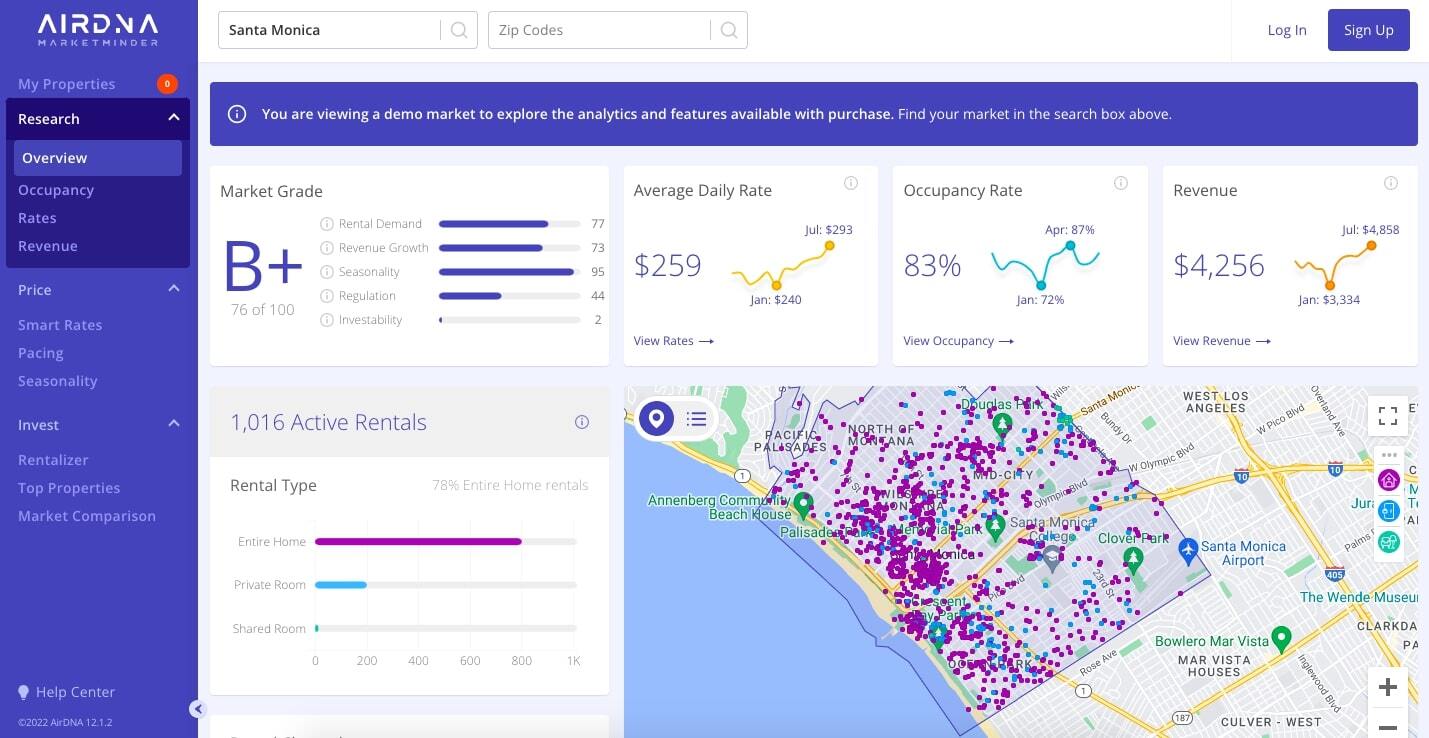
Use AirDNA’s MarketMinder to discover where to invest, set the perfect price, and stay two steps ahead of the competition.
Source: AirDNA
Mashvisor
This tool has a 7-day free trial. Then, it costs $70 per month. Mashvisor is a great software to analyze an Airbnb property or long-term rental investment. Just by entering the property address, you can access these estimates:
- Cash flow
- Cash on cash return
- Cap rate
- Gross rent multiplier (GRM)
- Vacancy rates
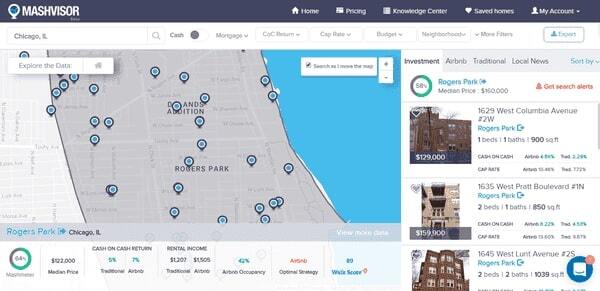
Analyze any neighborhood nationwide in just a few seconds, access powerful analytics, and make a purchasing decision with Mashvisor.
Source: Mashvisor
Vrolio
To use this free tool, you’ll need to have all the information regarding associated costs and expenses. Then, you can enter the information in their investment calculator and get a more accurate estimate for:
- Average monthly cash flow
- Annual cash flow
- Cash on cash return
- Annual occupancy to break even
- Break-even occupancy (in weeks)
- Net operating income (NOI)
- Cap rate (ROI)
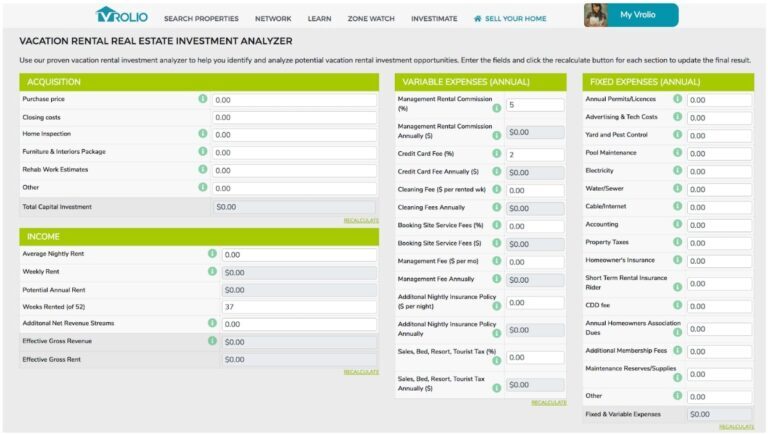
The Vrolio vacation rental real estate investment calculator allows you to get an accurate estimation of your property annual profits.
Source: Vrolio
6. Consider how quickly you can rent it
If you’re investing in property, you should have extra cash to cover monthly payments while you get guests through your door. Define the length of that waiting period and the expected time for renovations and furnishing. Factor this into your calculations.
7. Get a property investment consultant
While you can make the analysis yourself, you’re better off asking professionals. Jetstream offers consultancy services for property investors that want to make the best possible decision. Book consultation hours with an expert.
8. Buy your STR property
Now that you’ve analyzed your finances, done market research, estimated income and expenses, and reviewed local laws and regulations, you’re ready to purchase your short-term rental property. Sign the papers, make the down payment, and get it ready for your first guest.
How to enter the vacation rental market stress-free
It’s almost impossible to make a stress-free investment. Especially if you’re purchasing a vacation home. Managing an STR can be a lot of work. But if you’re investing for passive income, it makes no sense for you to have active responsibilities. Self-managing your STR is a personal choice that puts you in full control of your property, but also makes you responsible for doing all of the work.
There are two other alternatives to help you manage your vacation rental with less stress:
1. Hire a property manager
Delegate all your responsibilities to a property manager (PM). They can be your boots on the ground and be responsible for:
- Managing your listings
- Contacting cleaners, gardeners, and pool cleaners
- Collecting payments
- Paying bills
They will most likely charge you a fixed fee upfront and you’ll have little visibility or control over your property. Many PMs will post your listings under their own brands, which means they also own your reviews. This makes it harder to start again if you decide to change companies or self-manage.
2. Outsource a remote management agency like Jetstream
Outsource cleaning management or a realtor to have boots-on-the-ground, but hire an agency like Jetstream to manage all remote responsibilities. Jetstream offers:
- 24/7 multilingual guest communications
- Schedule coordination with your contractors
- Listing and dynamic pricing management and optimization
- Content creation for listings
- Direct booking website management
- Payment collection
- Timely payment of bills
- Guest screening
With Jetstream, there are no up-front payments required or hidden fees. You’ll pay a percentage according to your occupancy rate, meaning you won’t pay if you have zero guests. Since we help manage your property remotely, while you keep ownership of all your listings and reviews, it’s easy to scale your business and build your brand.
Is the vacation rental market a good investment?
Investing in STR property means a higher CoC and ROI than with long-term rentals. You’ll have a better cash flow and diversified retirement investments. But it can be a bad move if you don’t understand the market or your finances.
Investments are never one hundred percent predictable. But investing in real estate can be a great way of making a passive income without having to do much of the work yourself—if you outsource the property management.
Hire an agency like Jetstream to manage all the manual work for you, and you’ll never have to answer a guest question, keep your property descriptions up to date, or manually change your prices.
Wondering how much money you can make out of your short-term rental?
There’s no need to spend hours analyzing your vacation property investment. Enter the Jetstream and leverage our tools and expertise to get an answer.