
Resort revenue management is essential to maximize bookings and avoid leaving money on the table. Unless you can afford to hire a dedicated revenue manager, however, it can be hard to know where to start.
We work with resort managers to help them optimize pricing, distribution, and bookings based on the latest industry insights and billions of data points. We reached out to our revenue management experts to ask them which resort revenue management strategies they recommend.
- What is resort revenue management?
- Resort revenue management challenges in the hospitality industry
- 7 Best resort and hotels revenue management strategies
- Checking out
- Frequently asked questions about resort revenue management
Based on those conversations, we’ve put together this handy guide. After reading it, you’ll know:
Want to do revenue management but can’t justify hiring in? Jetstream is an all-in-one channel and revenue management solution for the hospitality industry.
What is resort revenue management?
Resort revenue management is a strategic, data-driven approach to maximizing bookings and revenue. It involves predicting demand to inform decisions about pricing, distribution, and marketing.
To put it another way, selling:
- The right unit
- To the right person
- At the right time
- On the right platform
- For the right price
 Are you equipped to make data-driven decisions to maximize bookings at your resort?
One of the challenges with resort property management is that you can’t sell all room types for the same price, even on the same day, or via the same channel. And when demand is high, you can’t create more inventory to meet it.
To optimize results, you need to get the best possible price for each unit. That means raising prices when demand is high, and adjusting them when it’s low.
Anticipating demand like this gives you a competitive edge, helps minimize unsold units, and optimizes revenue during off- and shoulder seasons. But it comes with certain challenges. Let’s take a look at those challenges here.
Resort revenue management challenges in the hospitality industry
Some resort revenue management challenges include:
Unpredictable demand
Revenue management relies heavily on accurately forecasting demand, consumer behavior, and booking trends. Since Covid-19, shifting markets, economic conditions, travel rules, and guest preferences have made this more challenging than ever.
In part, this is because traditional revenue management systems rely on historical data. Pre-2020, if you had 60% occupancy at $200 per unit, it was reasonable to expect the same next year.
As we’ve all learned, though, the past isn’t always the best crystal ball. As well as being skewed by global events like Covid, historical data models won’t help you prepare for increased competition if a new hotel business just opened in your resort.
Seasonality
Apart from those that have more than one high season, many resorts must generate 80% of their total revenue in 20% of the year.
If you're fortunate to be in a sell-out resort with limited supply, you need to adjust pricing, length of stay, and other factors to steal bookings from the competition and avoid leaving money on the table. Or worse, ending up with unsold inventory or orphan nights.
This means achieving the highest possible rates at the highest possible occupancy during peak months, and offering attractive deals or accessing new markets at slow times to ride out the troughs.
 Beach resorts are particularly affected by seasonality.
Hitting the distribution channel sweet spot
Distribution channels like OTAs bring in more bookings, but commissions eat into your profits. And with new players emerging all the time, it can be hard to ensure you’re across all the right channels for your business model.
Getting your channel mix right requires being able to predict and react to new trends, and close collaboration with sales and marketing.
Access to data
Revenue management lives and dies by the accuracy of your data. But it’s not always quick or easy to obtain. Local hoteliers can spend 75% of their time just gathering and collating data from multiple sources into Excel spreadsheets and presenting it.
 Predicting demand relies on analyzing multiple data points.
Access to tech
Building and maintaining an integrated tech stack complete with all the latest tools is extremely expensive and requires technical expertise. Not to mention training your teams on different platforms.
Access to skills
Revenue management is a highly specialized role that requires familiarity with the latest tech for:
- Demand and performance forecasting
- Inventory and yield management
- Competitor, customer behavior, and historical data analyses
- Pricing strategies
- Customer segmentation
- Channel management
- Marketing
- Tracking and reporting on key metrics
Hiring a dedicated revenue manager and building an in-house knowledge base is, therefore, time-consuming and costly. In smaller hotels, in particular, finding the right blend of skill sets is extremely challenging. And your property size may not justify hiring a full-time role.
7 Best resort and hotels revenue management strategies
Here are some strategies to overcome those challenges.
1. Look forward as well as back
Use predictive as well as historical data to forecast the impact of seasonality, important local events, or macroeconomic conditions across all your customer segments.
Jetstream plugs into your existing tech stack and partners with Wheelhouse to analyze billions of data points and apply a blended approach based on reactive (what happened in the past) and predictive (what might happen in the future) data. This allows us to consistently hit the pricing sweet spot.
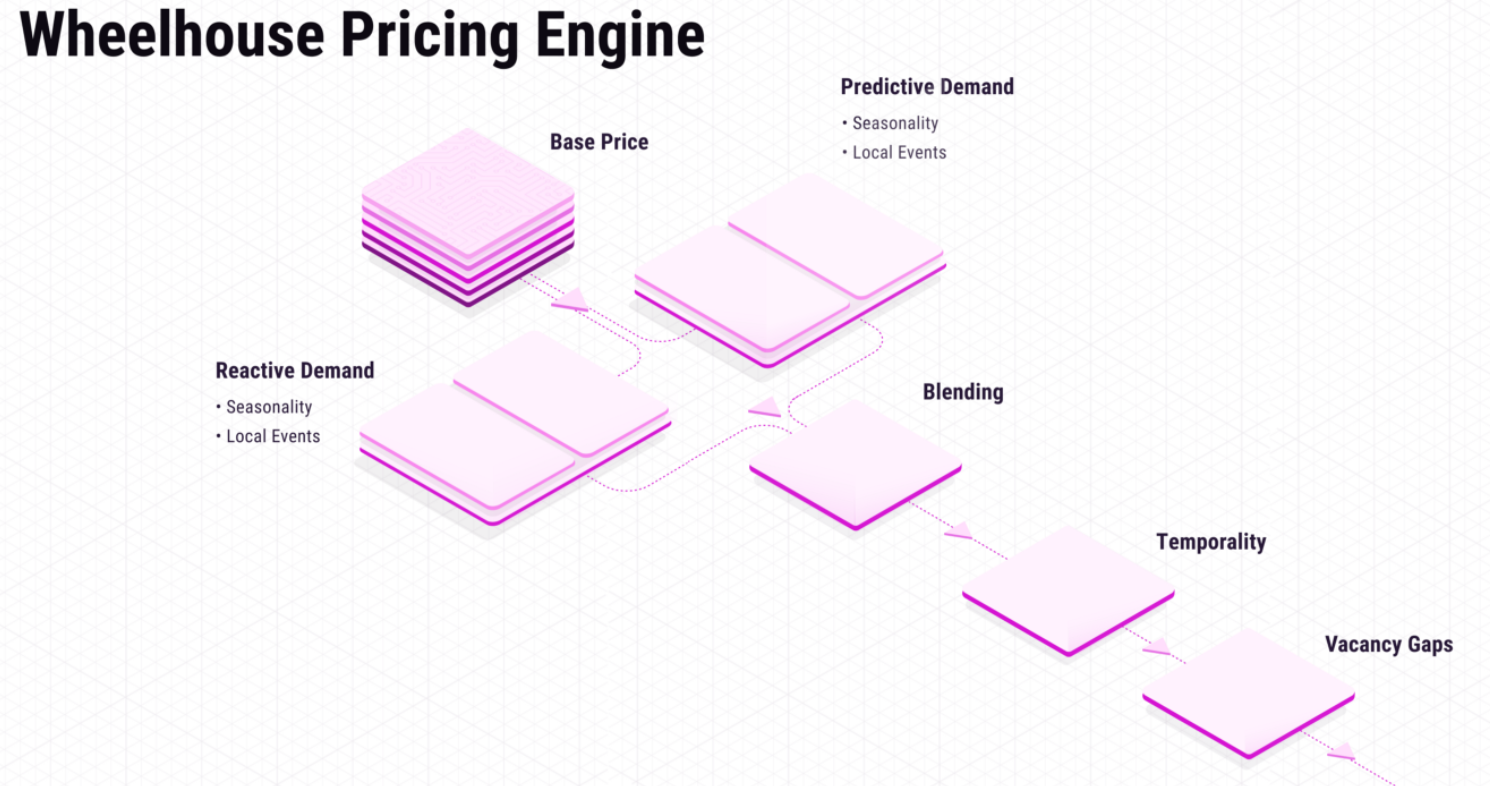 Wheelhouse analyzes reactive and predictive demand to provide a fuller picture of bookings.
Predicting fluctuations in demand like this allows you to develop the right pricing, distribution, and marketing strategies to optimize occupancy. Like bundling amenities, upselling, or offering early-bird discounts around in-demand dates.
Want to do revenue management but can’t justify hiring in? Jetstream is an all-in-one channel and revenue management solution for the hospitality industry.
2. Segment customers
Define groups of travelers and target them according to demographics, reason for stay, duration, booking channel, and whether they’re new, regular, or returning travelers. Segmentation allows you to offer discounts to loyal customers, create packages, negotiate business rates, etc. to maximize revenue.
3. Practice yield management
As occupancy increases, so should average daily rates (ADR). Yield management involves selling the greatest number of available rooms at the highest possible price according to customer demand forecasting by playing with factors like
- Maximum and minimum length of stay (to encourage longer visits or limit discounted bookings)
- And offering fixed rates to companies to encourage last-minute business bookings
4. Don’t limit distribution
Allocating fixed inventory to specific channels can cause you to miss out on bookings. Instead, make sure you’re across the right platforms for your property and guest profile/s and load all your inventory.
Remember to select regional as well as international online travel agents (OTAs), and check they fall into your budget.
Use full-stack channel management like Jetstream to connect you to major marketplaces like Leavetown, Vrbo, Airbnb, Flipkey, Expedia, Booking.com, as well as syncing with key niche players in your markets.
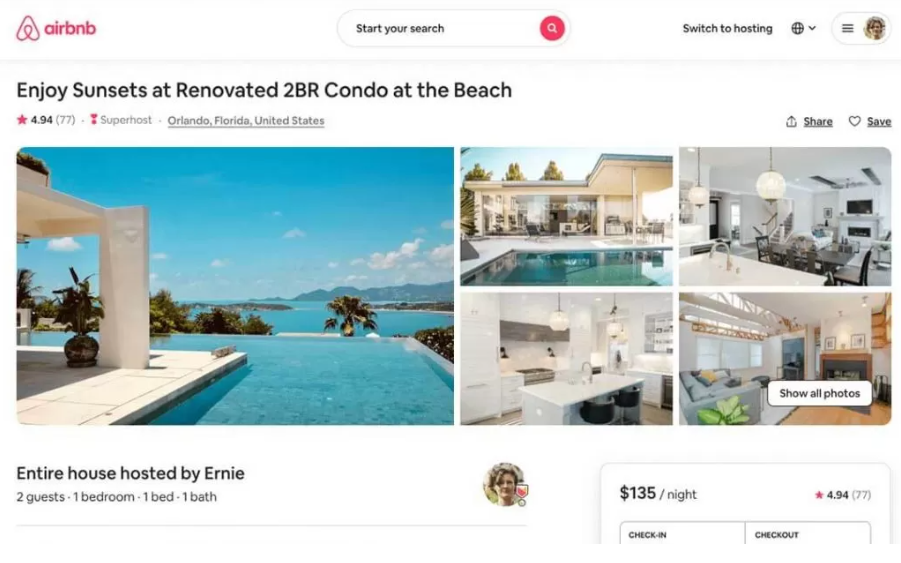 Airbnb isn’t the only channel out there. Jetstream can get you listed on even more relevant platforms, without any extra hassle.
5. Use a mix of pricing strategies
Flexible pricing helps maintain stable occupancy levels even in low-demand periods.
Poplar strategies include:
Dynamic pricing, which leverages internal data like segmentation, customer profiles, etc., and external data like competitor pricing, weather, and booking trends to adjust pricing in real-time according to demand.
Open pricing, which creates different prices according to guest segment, channels, time of booking, etc.
Other strategies include setting minimum visit durations in high-demand periods; incentivizing long stays with lower rates; offering special rates for direct bookings; and bundling services (like partnering on airport transfers or tours).
6. Encourage direct bookings
Save OTA commissions by setting up your own branded website. Make sure it’s user-friendly, SEO-optimized, and has a robust, integrated booking engine and payment options. Include attractive photos to help guests visualize the experience, and highlight amenities and reviews.
Once that’s done:
- Add your site to Google My Business and Google Free Hotel Bookings
- Get listed on metasearch engines like TripAdvisor and Trivago.
- Use the right social media channels to connect with your audience.
- Use paid ads and social media to drive traffic to your site.
7. Target new markets
They say every cloud has a silver lining, and since the pandemic that’s been the “workation” trend. Some 81% of people plan on working remotely at least part of the time, and a lot want to combine it with travel. Attracting this new segment with “digital nomad promotions” can really mitigate off-season lack of demand.
Tapping into the trend requires optimizing pricing and amenities. For example, by incentivizing longer stays, using minimum-length-of-stay controls, and providing a workspace and reliable Wi-Fi.
Remember to also offer short getaways in parallel to maximize booking opportunities.
 Attracting remote workers allows you to offset the lack of revenue in low season.
Read more about how we achieved this for one of our clients.
Want to do revenue management but can’t justify hiring in? Jetstream is an all-in-one channel and revenue management solution for the hospitality industry.
5 reasons to outsource revenue management
Bottom line: unless you hire a dedicated revenue manager, all the above takes you away from other tasks. And particularly in smaller properties revenue management often takes a back seat to more pressing day-to-day concerns.
This means outsourcing is often an attractive alternative for the following reasons:
1. Access expertise, data, and tech for a fraction of the cost
Outsourcing provides access to expert talent, skills, and the latest industry insights without having to pay a full-time salary or invest in regular training. Leverage cutting-edge tech for analytics, reporting, data management, pricing, and distribution without crippling investment.
When you outsource to Jetstream, you get access to a wide knowledge base. We have access to the latest data & insights from OTAs/channels, and we pool anonymized insights from our entire customer database.
All of which is far more cost-effective than trying to build a multidisciplinary in-house team and tech stack. And you don’t need to worry about losing your experts to the competition.

Jetstream complements your marketing team by producing curated content for your unit.
2. Boost your reach
Having your outsourced finger on the pulse of industry developments allows you to access more, and more innovative, channels, as well as those that best fit your market.
At Jetstream, we also offer curated, optimized marketing content for your unit, and ongoing listing optimizations based on multi-marketplace data.
3. Gain a competitive advantage
Accessing ready-made resort revenue management expertise and distribution strategy gives you an edge over competitors that are struggling to manage revenue in-house, or not doing it at all.
4. Free staff up to focus on other activities
Stop struggling to manage revenue and focus on improving the guest experience in other areas, like housekeeping, restaurants, sales, etc. to boost satisfaction, loyalty, and reviews.
Optionally, Jetstream can even replace your PMS, leaving you completely free to focus on other business areas while your listings are taken care of.
 Outsourcing your revenue management will free up resources so you can focus on giving every guest a great experience.
5. Lower risk
At Jetstream, we work on a shared-success commission basis, so you get access to everything you need but only pay based on generated revenue. No more paying salaries or expensive tech contracts when you’re not booked up.
Checking out
Revenue management is essential to gain a competitive edge in the hospitality industry by optimizing pricing and bookings. But it’s highly-skilled, time-consuming, and expensive, and requires access to the latest tech and data sources. That’s why resort managers are increasingly choosing to outsource revenue management to platforms like Jetstream to maximize revenue and realize business opportunities.
Want to do revenue management but can’t justify hiring in? Jetstream is an all-in-one channel and revenue management solution for the hospitality industry.
Frequently asked questions about resort revenue management
What is revenue management in the hotel industry?
Revenue management in hotel operations is using data to predict demand and adjust pricing to maximize bookings and revenue.
What are the different types of revenue management?
The different types of revenue management include analyzing historical and predictive data; practicing yield and inventory management; segmenting customers; using different pricing strategies, and targeting new markets.
What are the 3 main concepts used in revenue management?
The 3 main concepts used in revenue management are dynamic pricing, data analytics, and forecasting.
What is the function of a revenue management manager?
A revenue management manager’s role is to analyze data and forecast demand to adjust pricing and marketing strategies to optimize bookings and revenue.